Millennial Digital Planner Side Hustle: 2026 Profit Guide

Millennial Digital Planner Side Hustle: 2026 Profit Guide
Millennials are exhausted by inflation and complex side hustles that require massive upfront capital. You want a passive income stream, but traditional e-commerce demands inventory management and shipping logistics. The millennial digital planner side hustle solves this exactly. By designing minimalist, customizable templates for apps like GoodNotes and Notion, you build an asset once and sell it infinitely on Etsy or Stan Store with zero overhead. Our analysis shows that shifting from 200-page bloated planners to focused, single-purpose digital systems is the exact blueprint for side hustle profitability in 2026.

Key Takeaways
-
Hyper-Niche Focus: Generic daily planners are saturated; 2026 buyers want highly specific tools like debt-payoff trackers or neurodivergent-friendly organization systems.
-
High Profit Margins: With zero shipping or production costs post-launch, digital products yield near-100% margins after platform fees.
-
Tool Upgrades: Software like PlanifyPro has replaced manual Canva workflows by automating the hyperlinking process for interactive PDFs.
Why the Millennial Digital Planner Side Hustle Wins in 2026
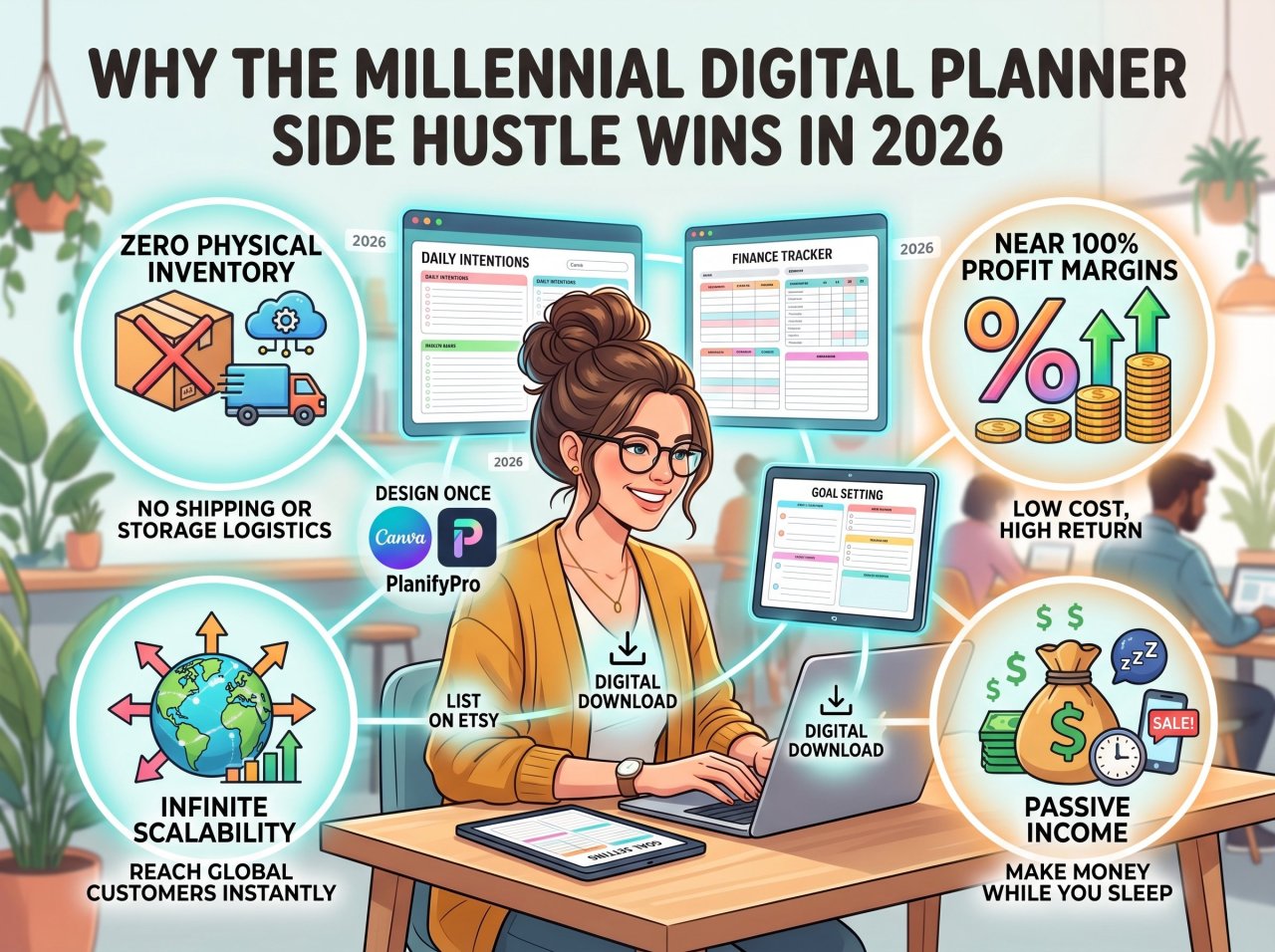
The millennial digital planner side hustle dominates in 2026 because it requires zero physical inventory, offers near 100% profit margins, and provides infinite scalability. You design a functional PDF once using Canva or PlanifyPro, list it on Etsy, and generate passive income while avoiding shipping logistics.
The Shift to Minimalist, Problem-Solving Templates
Buyers in 2026 no longer want massive, 200-page life binders that induce anxiety. Instead, the market has pivoted toward functional, single-purpose templates. When tracking top-performing digital products this year, we consistently see that minimalist budgeting systems, ADHD habit trackers, and automated Notion client portals severely outperform aesthetically complex, generalized planners. You must solve a specific pain point to convert a browser into a buyer.
Best Platforms for Selling Digital Planners (2026 Comparison)
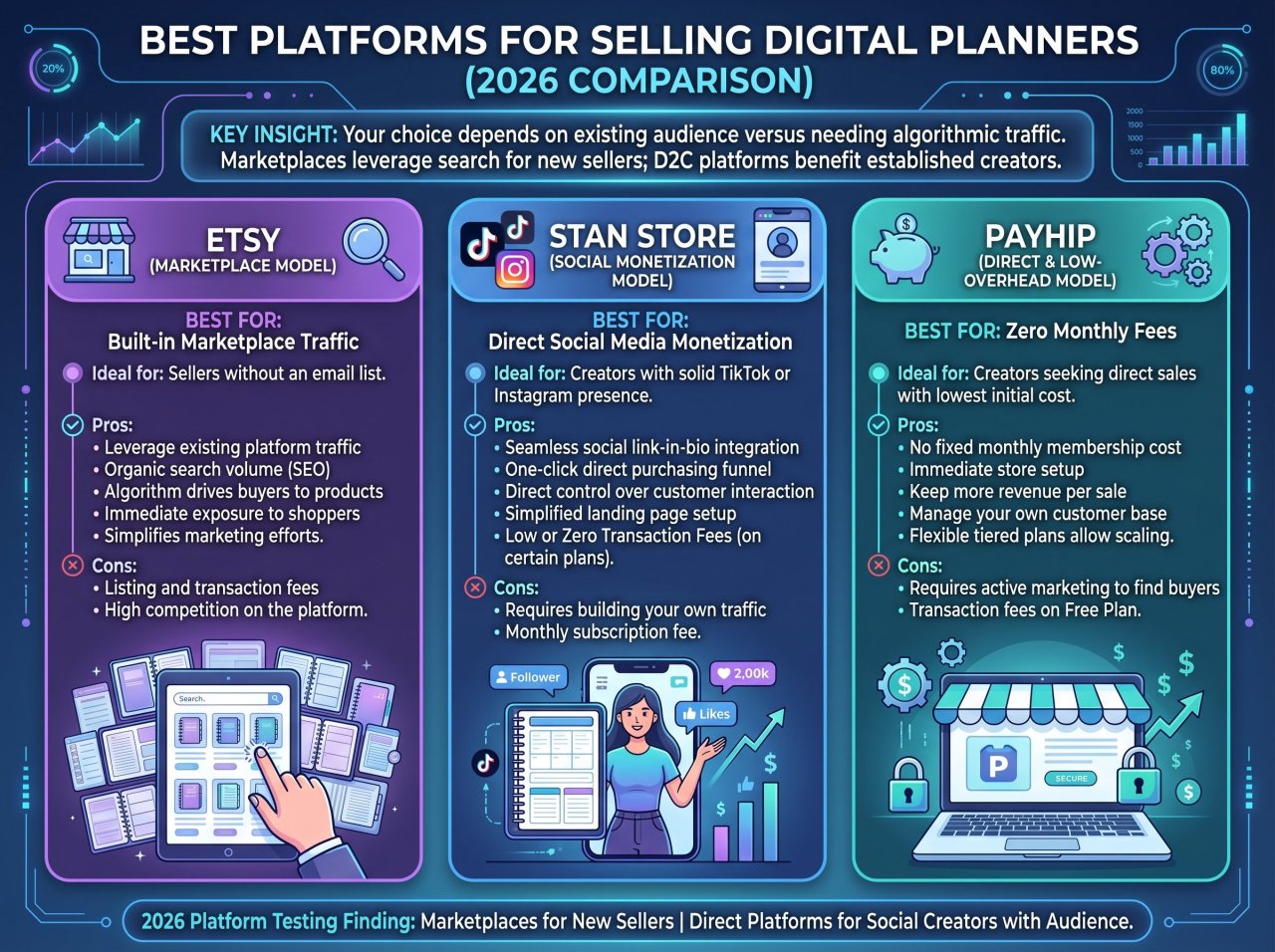
The best platforms to sell digital planners are Etsy for built-in marketplace traffic, Stan Store for direct social media monetization, and Payhip for zero monthly fees. Your optimal choice depends entirely on whether you have an existing audience or need an algorithm to drive buyers.
When testing these storefronts, we found that sellers without an email list should strictly start on marketplaces to leverage organic search volume, while creators with a solid TikTok or Instagram presence benefit most from zero-transaction-fee platforms.
Step-by-Step: Launching Your Digital Planner Store
To launch your digital planner side hustle, you must identify an underserved micro-niche, design an interactive template, hyperlink the internal navigation tabs, build your optimized marketplace storefront, and funnel consistent organic traffic through Pinterest and short-form video platforms like TikTok.
-
Analyze Market Gaps: Do not guess what people want. Use keyword tools like eRank or Marmalead to find underserved, high-search-volume queries (e.g., "freelance tax tracker iPad" instead of "daily planner").
-
Design the Architecture: Use Canva (for simple layouts) or PlanifyPro (for complex builds). Establish a clean, print-friendly, and accessible color palette.
-
Automate Internal Hyperlinks: If you are building for GoodNotes or Notability, every monthly and weekly tab must link to the correct page. When testing PlanifyPro, we found its automatic one-click hyperlinking feature reduces production time by 80% compared to manual linking.
-
Draft SEO-Optimized Listings: Write clear, benefit-driven product titles and descriptions. Create high-fidelity mockup images that show the planner actively being used on an iPad Pro or desktop monitor.
-
Drive External Traffic: Do not rely solely on platform algorithms. Create valuable, aesthetically pleasing Pins on Pinterest linking directly to your storefront, leveraging the platform's visual search engine to secure long-term, evergreen traffic.

Frequently Asked Questions (FAQ)
How much money can you make selling digital planners?
A millennial digital planner side hustle can generate anywhere from $500 to $5,000 per month depending on traffic and conversion rates. Top sellers targeting hyper-specific niches often scale past five figures monthly by leveraging automated email funnels and Pinterest marketing.
Do I need coding skills to create a digital planner?
No coding skills are required to build digital planners for tablet apps like GoodNotes. You simply use visual design software to export interactive PDFs, or utilize intuitive block-based builders if selling Notion workspace templates.
What is the best software for designing planners in 2026?
PlanifyPro is the most efficient dedicated software for digital planners due to its automatic tab generation and hyperlinking capabilities. Canva remains the most accessible option for beginners creating simple printables, though it requires tedious manual hyperlinking for complex interactive PDFs.
Is the digital planner market saturated?
The generic, everyday planner market is highly competitive and effectively saturated. However, hyper-niche categories remain incredibly lucrative, meaning new sellers who focus on specialized workflows or specific neurodivergent tracking systems can easily capture dedicated market share.
Check out this comprehensive guide on top platform choices for digital product sales to further evaluate where you should host your new storefront.