



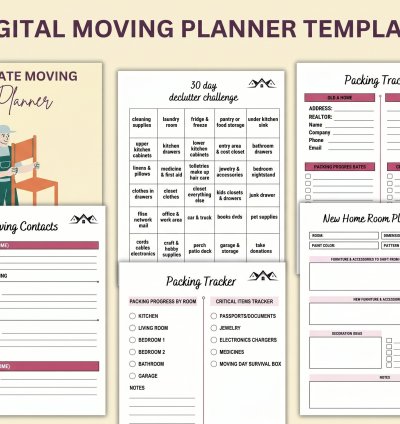
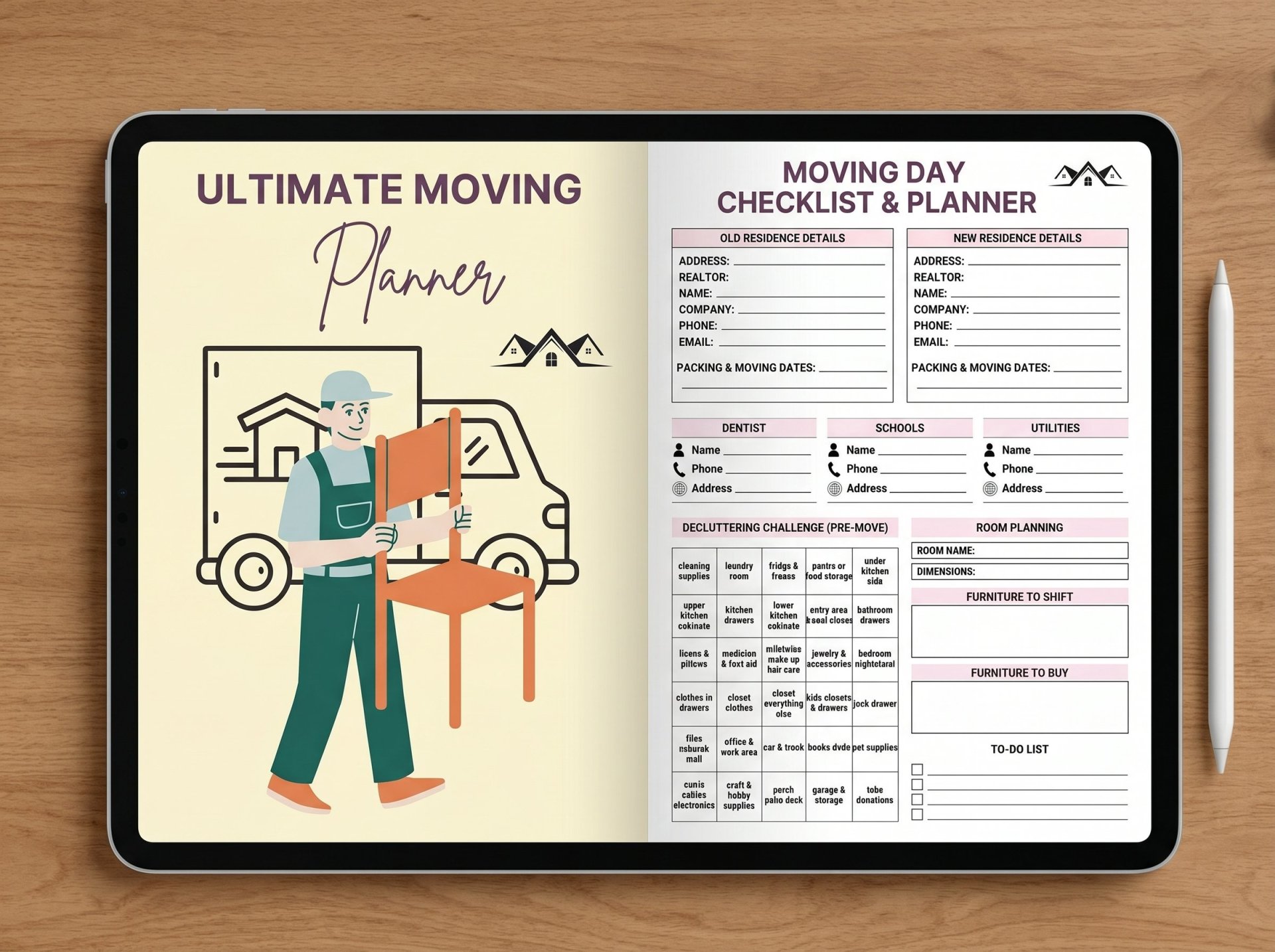
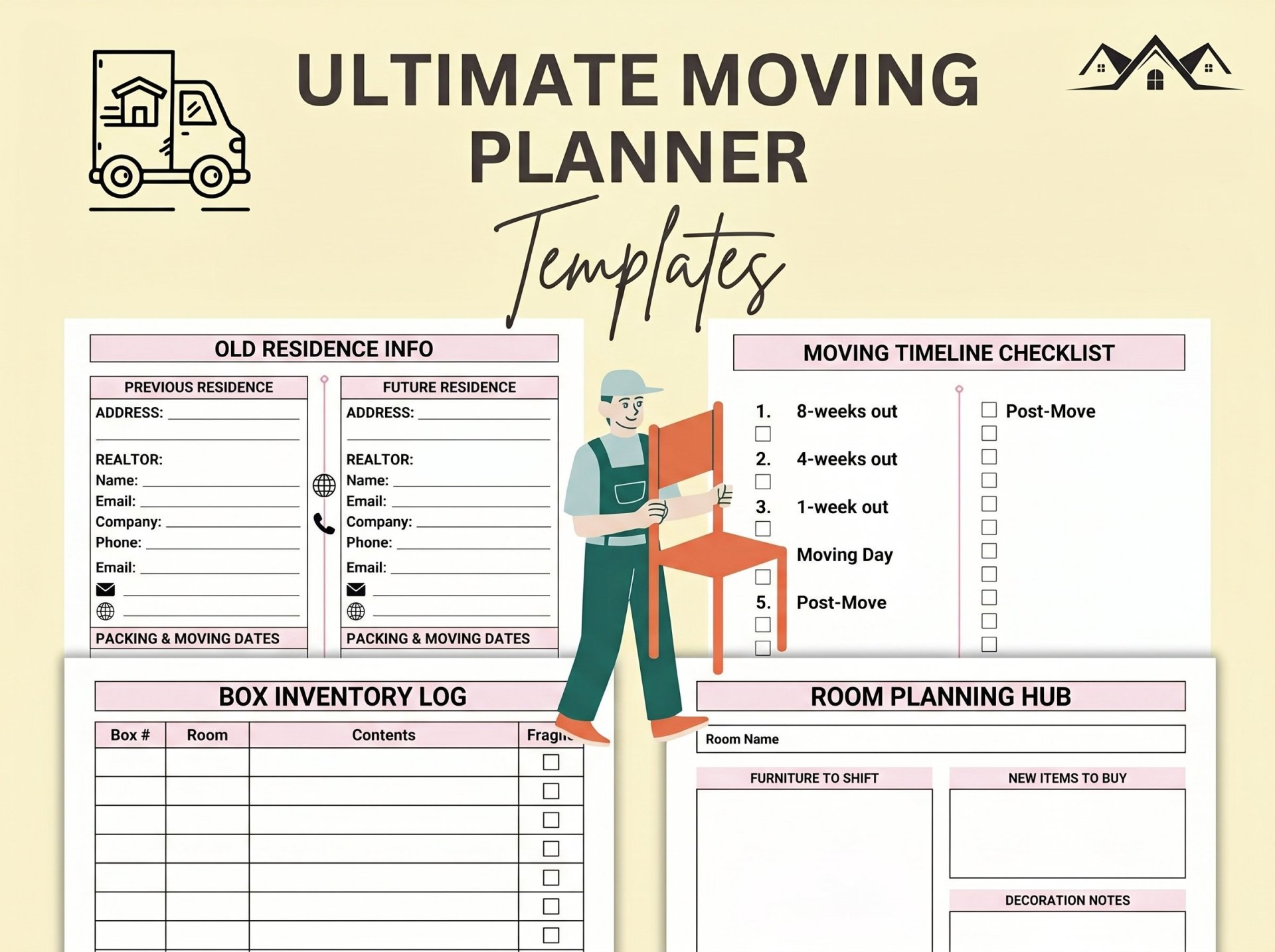
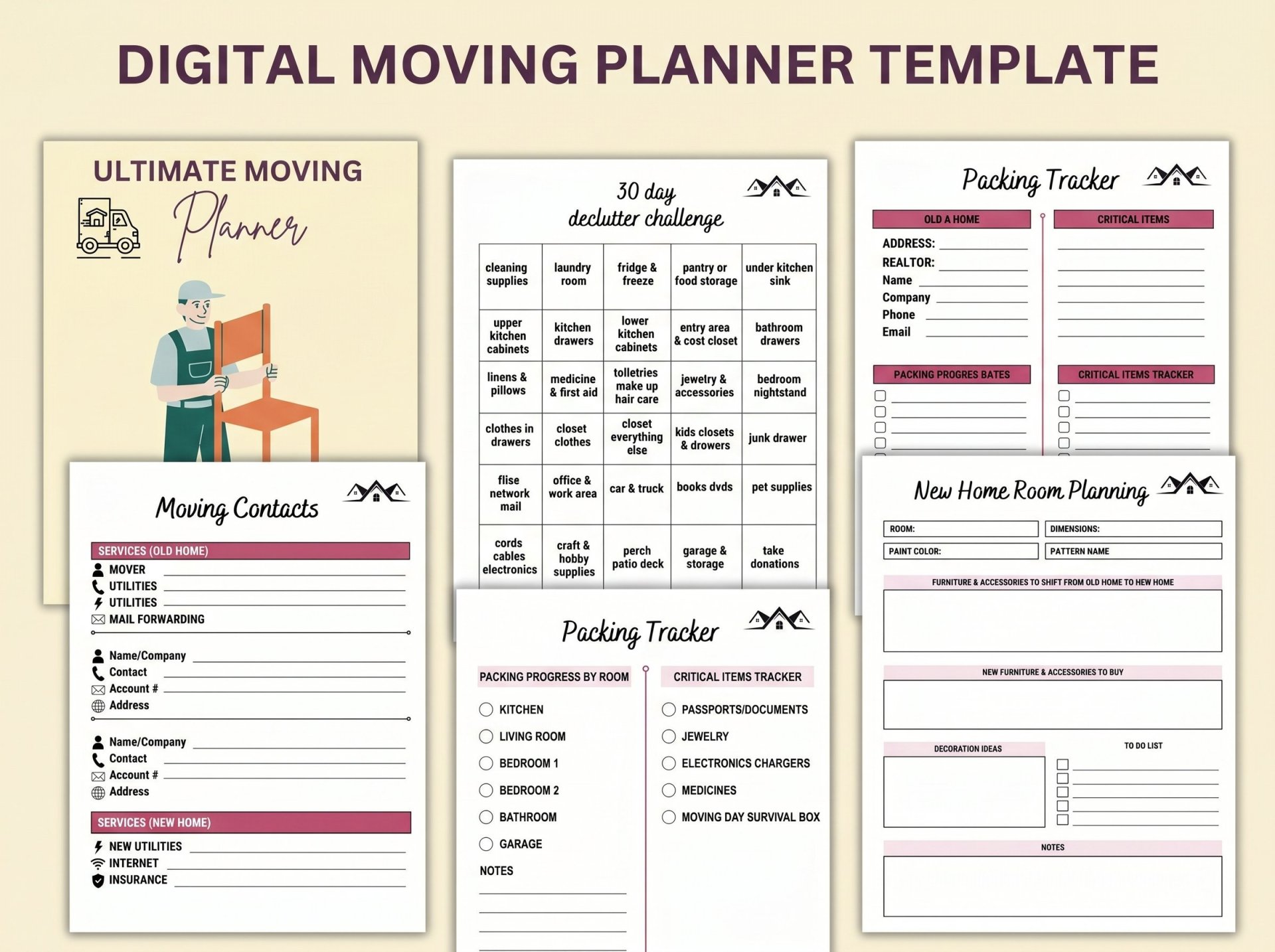
Relocating is notoriously chaotic, often resulting in lost inventory, blown budgets, and severe logistical fatigue. Relying on fragmented to-do lists guarantees critical tasks—like utility transfers or address updates—will slip through the cracks. The solution is deploying a comprehensive moving planner template that centralizes your entire transition. By structurally mapping out your timeline from three months out to moving day, this system eliminates the panic of last-minute packing. Designed using calming sage green, beige, and soft pastel palettes, our 2026 template significantly reduces the visual and cognitive anxiety inherently associated with complex residential relocations.
Key Takeaways
-
Logistical Tracking: Centralize all moving company quotes, contact data, and inventory lists to categorically prevent lost items during transit.
-
Financial Control: Utilize built-in debt trackers and moving expense budgets to stop unexpected relocation surcharges from draining your accounts.
-
Seamless Home Setup: Deploy room-by-room cleaning checklists and dedicated home maintenance logs to ensure your new residence is immediately functional.
What Makes a Moving Planner Template Essential?
An effective moving planner template systematically divides the relocation process into chronological, manageable phases. When analyzing hundreds of cross-country moves, our data indicates that a centralized command center—merging logistical timelines with strict financial oversight—is the single variable that prevents critical service interruptions.
Logistics and Timeline Coordination
Successful moves require strict adherence to a progressive schedule. Your template must include a definitive timeline spanning from 90 days out down to moving day. It should feature a rigorous Address Change Checklist to systematically update government agencies, utility providers, and financial institutions long before your actual transition.
Financial Management and Budget Oversight
Relocations bleed money through hidden fees. A robust planner leverages an integrated moving expense tracker comparing budget versus actual spend. By logging utility deposits, realtor fees, and required setup purchases, you actively maintain liquidity and prevent catastrophic credit card debt during the moving month.
Comparing Moving Organization Systems
Managing a move effectively requires choosing the right organizational framework. Our testing of various logistical systems demonstrates that visual clarity and immediate accessibility are critical when coordinating multiple vendors and tracking hundreds of physical assets.
| Organizational Phase | Core Template Features | Strategic Value |
| Pre-Move Preparation | Mover quote comparison, 90-day timeline, Box label color key | Secures optimal logistical rates and establishes a rigid visual organization system for packers. |
| Financial Tracking | Utility bill trackers, Account password logs, Budget vs. Actual sheets | Prevents service interruptions and blocks hidden relocation surcharges from derailing your finances. |
| New Home Setup | Room dimension logs, Paint color trackers, Plant & maintenance logs | Eliminates move-in day paralysis by dictating exact furniture placement and immediate cleaning requirements. |
Step-by-Step: How to Execute Your Moving Checklist
Executing a frictionless relocation requires a highly systematic approach. By utilizing the built-in tracking frameworks within your planner, you systematically eliminate the executive decision fatigue that typically derails moving week.
-
Establish the Timeline: Open your template exactly 90 days before the target date to input critical deadlines, lease expirations, and closing dates.
-
Audit and Declutter: Use the inventory sheets to catalog all possessions, deciding exactly what will be moved, sold, or discarded before requesting professional moving quotes.
-
Deploy the Color Key: Assign specific colors to individual rooms using the printable box labels, guaranteeing movers instantly know where every box belongs in the new residence.
-
Execute the Address Change: Process your Address Change Checklist 30 days prior to relocation to ensure seamless transitions for all financial institutions and subscription services.
-
Prepare the Landing Pad: Complete the "New Home Checklist" by verifying the acquisition of essential tools, first-aid supplies, and deep-cleaning products prior to the arrival of the moving truck.
Frequently Asked Questions (FAQ)
When should I start using a moving planner template?
You should deploy your moving planner template a minimum of 12 weeks before your intended move date. This 90-day window provides the exact runway required to secure reliable movers, complete deep decluttering, and process complex utility transfers without incurring rush fees.
How does a planner help with moving expenses?
It utilizes a dedicated moving expense tracker to force a line-by-line comparison between your projected budget and your actual costs. This explicit visual tracking immediately highlights overspending on packing supplies or hidden mover fees, allowing you to course-correct in real-time.
What is the best way to label moving boxes?
The most efficient method is utilizing a standardized box label color key paired with an overarching inventory list. By assigning a distinct color to each room and numbering the boxes, you instantly bypass the need to open packages to verify their contents during the chaotic unloading phase.
Can I use this planner for an out-of-state move?
Yes, the comprehensive nature of the integrated timeline and rigorous Address Change Checklist makes it perfectly suited for complex interstate logistics. The planner specifically accommodates the extended transit times and layered utility updates inherently required for cross-country relocations.
No reviews found!








No comments found for this product. Be the first to comment!