
7 Elite Printable Weekly Meal Prep Checklist Systems
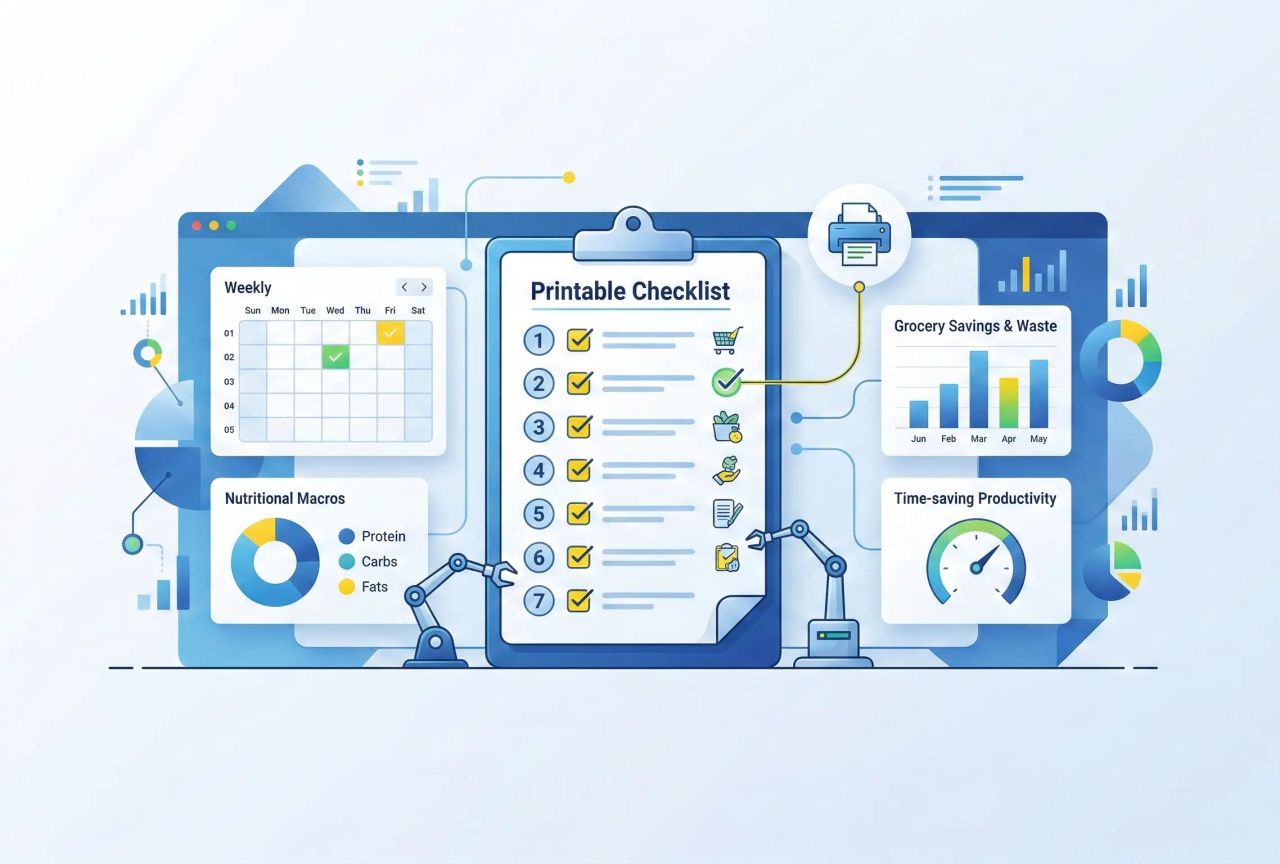
7 Elite Printable Weekly Meal Prep Checklist Systems
The contemporary landscape of domestic culinary management demands a synthesis of operational efficiency, nutritional precision, and economic foresight. Facing sustained macroeconomic pressures and the escalating costs of commercial food acquisition, modern households are increasingly transitioning toward structured domestic food production. This shift is not merely a reaction to inflation; it represents a fundamental re-evaluation of how nutrition intersects with time management, cognitive load, and preventative health. In 2026, the reliance on a comprehensive printable weekly meal prep checklist has evolved from a basic organizational novelty into an essential logistical protocol. This exhaustive analysis explores the optimal structuring of domestic food preparation, integrating current artificial intelligence trends, food safety thermodynamics, and advanced batch-cooking methodologies to maximize household operational efficiency.
What is a printable weekly meal prep checklist?
A printable weekly meal prep checklist is an elite organizational document utilized to audit existing pantry inventory, select macro-balanced recipes, generate categorized grocery lists, and schedule efficient batch-cooking sessions. It functions as a strategic blueprint that streamlines domestic food preparation, ensures strict adherence to nutritional targets, minimizes spontaneous grocery expenditures, and drastically reduces household food waste by guiding the practitioner systematically from initial planning to optimal food storage.
The Evolution of Domestic Culinary Systems in 2026
The behavioral economics surrounding domestic food consumption have undergone a profound transformation. Recent analytics from the Food Industry Association in 2026 indicate that nearly 44% of United States grocery consumers now actively embrace a weekly mealtime tradition, while 36% are actively building new structured eating routines.
Simultaneously, the cultural perception of domestic cooking has shifted from an obligatory, burdensome chore to a therapeutic and socially anchoring exercise. Current statistical modeling reveals that an overwhelming 71% of individuals find the act of cooking to be more stress-relieving than stressful.
Despite this widespread enthusiasm, the logistical burden of planning multiple meals daily remains a significant friction point. Approximately half of North American consumers report eating at home more frequently, which exponentially increases the volume of required planning, inventory management, and shopping.
The prevailing marketing and cultural trend in 2026 emphasizes authenticity, transparency, and lived expertise over highly polished, unrealistic culinary perfectionism.
The Economic and Psychological ROI of Structured Planning
The return on investment (ROI) derived from utilizing a structured planning system manifests in both highly tangible financial savings and profound intangible psychological benefits. The implementation of robust organizational tools actively combats the rising costs associated with unstructured domestic management and spontaneous consumption.
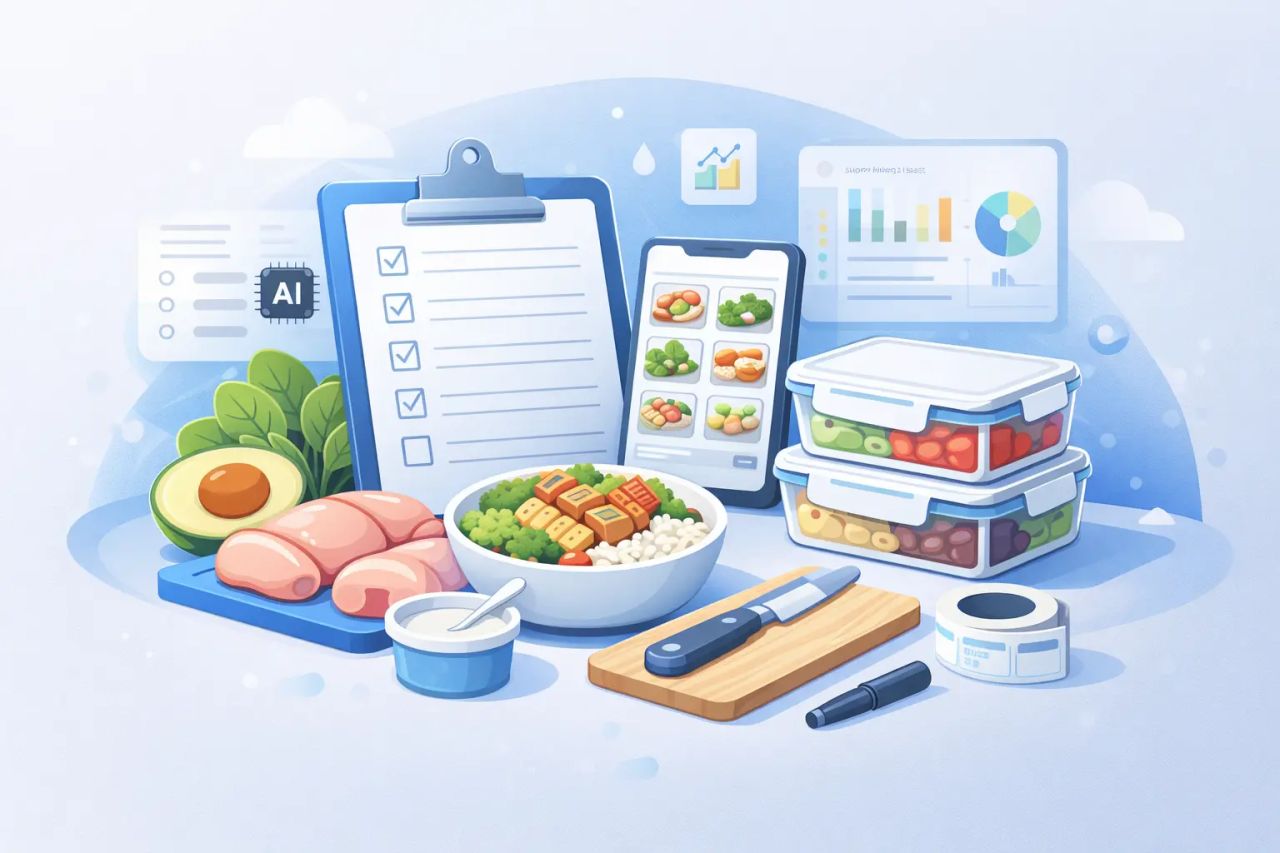
The Financial Imperative and Cost Mitigation
According to recent financial reporting from CNBC, an increasing and alarming demographic of consumers is utilizing high-interest debt instruments merely to finance standard grocery acquisitions.
When ingredients are purchased strategically through a grocery list, the savings are mathematically substantial. Analyzing protein costs reveals that utilizing cost-effective, high-yield staples can drastically reduce weekly expenditures compared to spontaneous, single-meal shopping. For instance, lean ground turkey typically retails between $4.99 and $5.99 per pound, yielding 22 grams of protein per four-ounce serving, while chicken thighs offer an even more aggressive economic advantage at $1.99 to $2.99 per pound, yielding 26 grams of protein per serving.
| Protein Source | Average Cost per Pound (USD) | Protein Yield (per 4oz raw) | Economic Efficiency Rating |
| Eggs | $0.20 - $0.40 per unit | 6g per egg |
Excellent |
| Chicken Thighs | $1.99 - $2.99 | 26g |
Excellent |
| Dried Beans/Lentils | $1.50 - $2.00 | 18g (per cooked cup) |
Superior |
| Chicken Breast | $3.49 - $4.99 | 31g |
High |
| Ground Turkey (93% Lean) | $4.99 - $5.99 | 22g |
Moderate |
| Salmon | $8.99 - $12.99 | 25g |
Low |
In rigorous student-focused budget models, a highly disciplined weekly meal plan can reduce total daily food expenditures to as little as £3.77, totaling roughly £105.52 over a sustained multi-week period, provided that specific baseline items are acquired in bulk quantities.
Furthermore, the restaurant industry currently loses an estimated $162 billion annually to food waste costs.
The Psychological Advantage and Cognitive Offloading
Beyond basic economics, the psychological relief provided by a codified system is profound. A hyper-demanding professional schedule is the primary catalyst for reliance on calorie-dense, economically inefficient takeout options.
Utilizing a checklist essentially time-shifts the cognitive labor of cooking. It compresses the decision-making process into a single, dedicated window, usually executed on a designated planning day such as Sunday.
The Optimal Step-by-Step Meal Prep System
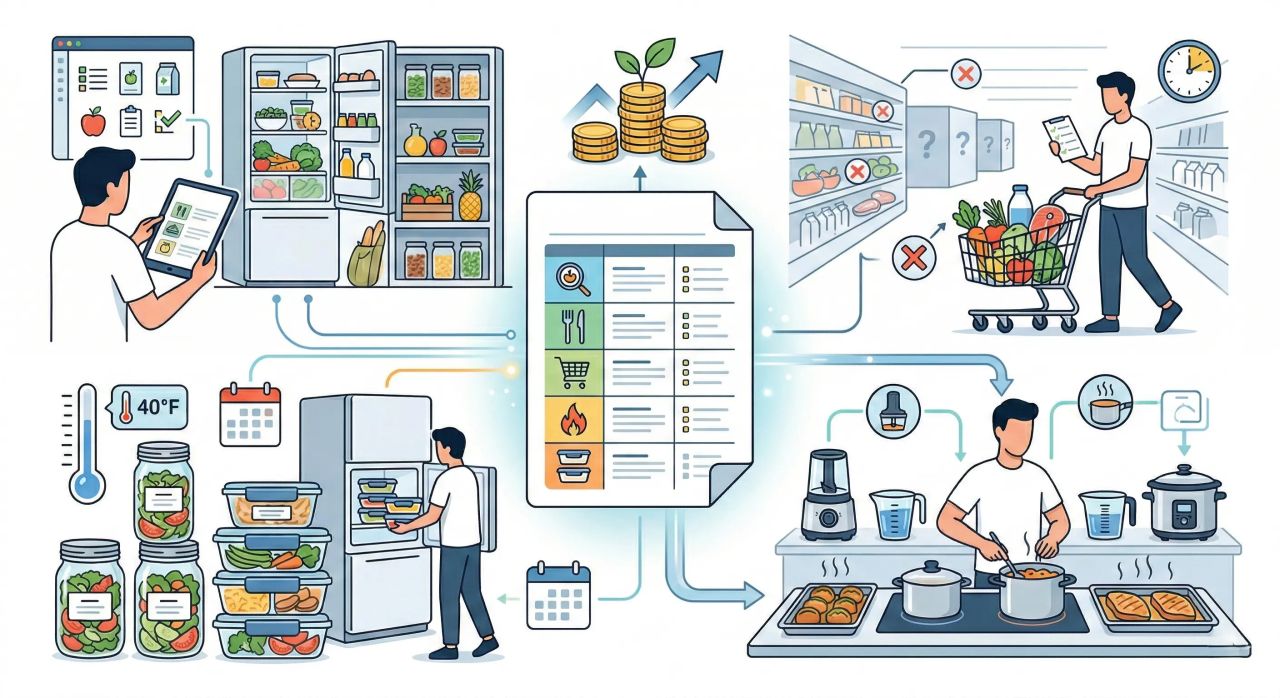
To transition from abstract planning to concrete execution, a systematic approach is mandatory. The following framework represents the industry-standard progression for optimizing domestic food preparation, specifically engineered to secure featured snippet visibility in algorithmic search results.
Step-by-Step Meal Prep Checklist Protocol
-
Conduct a Baseline Inventory Audit: Before drafting a new menu, systematically evaluate the refrigerator, freezer, and dry pantry. Document all highly perishable items that require immediate utilization to establish a baseline constraint.
-
Select Synergistic Recipes: Choose a highly integrated matrix of three to four meals that utilize overlapping base ingredients. Selecting isolated recipes that require highly specific, single-use ingredients dramatically inflates grocery costs, expands the time required for preparation, and guarantees leftover waste.
-
Generate a Categorized Grocery List: Transfer required items to the formalized grocery list section of the printable template, organizing them strictly by typical supermarket geographical layouts (e.g., Produce, Dairy, Dry Goods, Proteins).
-
Execute the 2-Hour Parallel Batch Cooking Session: Dedicate a specific, uninterrupted time block for execution. Process all ingredients in logical, overlapping batches rather than adopting a linear, meal-by-meal approach to maximize workflow efficiency.
-
Implement Advanced Portioning and Labeling: Distribute the finished thermal components into appropriately sized meal prep containers. Label every single unit with the precise contents and the exact date of preparation to ensure strict adherence to food safety timelines and to facilitate rapid identification.
This protocol borrows heavily from commercial kitchen logistics, specifically utilizing the concept of baseline data establishment to predict exact consumption patterns, thereby preventing both dangerous shortages and costly overproduction.
The 10-Ingredient Framework for Extreme Efficiency
A primary point of failure for novices engaging in dietary planning is attempting to incorporate excessive culinary variety during the initial phases. When a printable weekly meal prep checklist becomes saturated with dozens of unique, disjointed ingredients, the logistical complexity scales exponentially. The refrigerator becomes hopelessly disorganized, preparation times double, and by midweek, the cognitive load triggers a reversion to commercial food delivery out of sheer frustration.
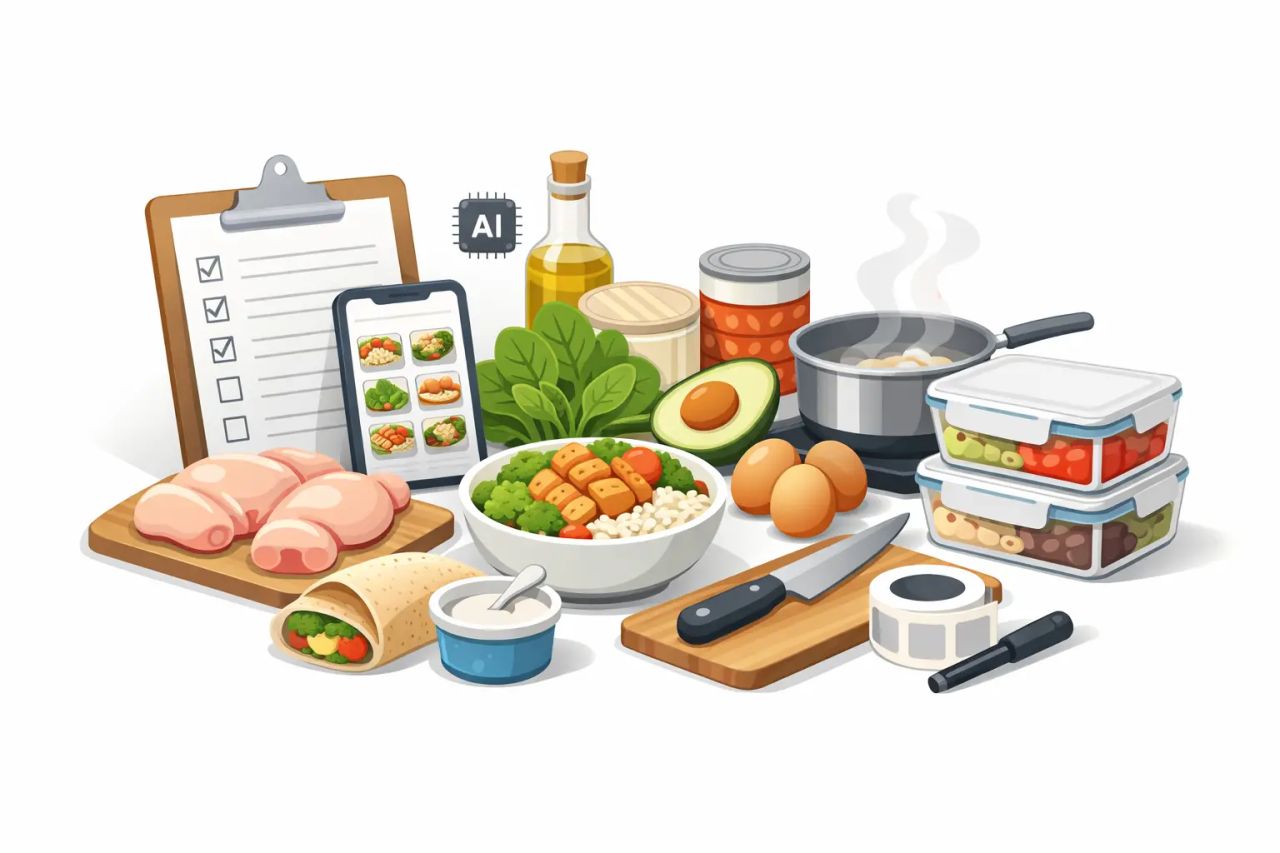
To counteract this phenomenon, the "10-Ingredient Framework" has emerged as a highly effective methodology in 2026. This system actively restricts the primary shopping list to a highly curated, ultra-versatile core of ingredients.
A standard highly optimized 10-ingredient list typically includes flexible, easily accessible items. The baseline assumes that basic pantry staples—such as olive oil, salt, black pepper, garlic powder, and chili powder—are perpetually maintained in the kitchen architecture.
The core ten ingredients include: Chicken thighs (or an equivalent lean protein), eggs (a highly versatile, cost-effective binder and secondary protein source), canned black beans (a high-fiber complex carbohydrate), rice (the primary caloric base), tortillas (a flexible delivery mechanism), frozen broccoli (a highly durable micronutrient source), baby spinach (a versatile raw or cooked leafy green), onions (an essential aromatic base), salsa (a low-calorie, high-impact flavor enhancement), and Greek yogurt (a protein-dense dairy product applicable in both sweet and savory contexts).
By utilizing this restricted matrix, the domestic cook can generate vast arrays of divergent meals without expanding the grocery budget. This methodology guarantees near-zero end-of-week waste, as every single ingredient experiences massive turnover rates.
| Day | Breakfast Application | Lunch Application | Dinner Application |
| Day 1 |
Greek yogurt |
Rice bowl with chicken, broccoli, and salsa |
Chicken tacos utilizing spinach, salsa, and Greek yogurt |
| Day 2 |
Eggs scrambled with sauteed onion and spinach |
Leftover chicken taco bowl combined with rice and broccoli |
Black bean tacos topped with salsa and Greek yogurt |
| Day 3 |
Greek yogurt |
Chicken and broccoli rice bowl |
Egg tacos utilizing tortillas, spinach, and salsa |
| Day 4 |
Eggs and spinach |
Black bean and rice bowl with salsa |
Chicken and broccoli stir-fry over rice |
| Day 5 |
Greek yogurt |
Leftover chicken and broccoli |
Black bean, chicken, and rice burritos |
This table illustrates the profound flexibility of the 10-ingredient framework, proving that immense variety can be extracted from a highly restricted, economically efficient grocery acquisition.
The 120-Minute Execution Protocol
The physical act of cooking is frequently identified as the most daunting phase of the entire system. However, by treating the kitchen as a temporary manufacturing environment rather than a casual domestic space, a full week of highly nutritious diet meal plans can be systematically produced in exactly 120 minutes.
Phase 1: Environmental Setup (15 Minutes)
Operational efficiency requires an entirely clear workspace. All irrelevant items must be purged from the countertops. The chosen meal prep containers, cutting boards, mixing bowls, and chef's knives must be staged precisely where they will be utilized. Simultaneously, environmental pre-heating is initiated: the conventional oven is set to 400°F (204°C), and large pots of salted water are brought to a rolling boil on the stovetop for complex grain processing.
Phase 2: Systematic Vegetable Processing (20 Minutes)
Vegetables almost always dictate the pace of the kitchen. All produce must be washed and processed in a single, continuous workflow. Precision in cutting is paramount based on the intended cooking application. Vegetables designated for high-heat roasting require significantly larger cuts to account for natural moisture evaporation and subsequent physical shrinkage during the roasting process. Conversely, ingredients intended for rapid stir-frying demand medium, perfectly uniform cuts to ensure even thermal distribution, while soup components require the smallest, most rapid-cooking processing.
Phase 3: Parallel Thermal Processing (30 Minutes)
This phase relies entirely on aggressive multitasking. While the primary proteins (such as seasoned chicken breasts or robust chicken thighs) undergo oven baking for 25 to 30 minutes, the stovetop is utilized simultaneously for simmering complex carbohydrates like quinoa or brown rice, which typically require 20 to 25 minutes.
Phase 4: Controlled Cooling and Thermodynamics (15–20 Minutes)
Food safety thermodynamics dictate that hot components must absolutely never be sealed immediately into airtight storage containers. Doing so traps radiating heat, which rapidly generates extreme internal condensation.
Phase 5: Assembly, Portioning, and Documentation (20 Minutes)
Once thermal equilibrium is achieved, the food is systematically transferred into the designated portion control vessels. The final step is rigorous documentation. Every single unit must be clearly labeled with its specific contents, the date of initial preparation, and the calculated expiration date based on standard food safety parameters.
Advanced Food Safety, Thermodynamics, and Storage Science
The ultimate success of a printable weekly meal prep checklist relies entirely on the scientific integrity of the storage phase. Producing high-quality nutrition is completely irrelevant if the food degrades biologically or texturally before consumption. In 2026, the selection of materials and adherence to strict thermal parameters is considered non-negotiable for anyone serious about domestic food production.
The Container Hierarchy
The physical vessel used to store food dramatically impacts its longevity, chemical safety, and reheating potential. The market currently offers several distinct tiers of storage technology.
Borosilicate Glass Containers represent the undisputed optimal choice for domestic refrigeration. Glass is completely microwave safe, impervious to acid degradation (meaning tomato sauces will not erode the material), resists all permanent staining, and permanently repels lingering odors.
BPA-Free Plastic remains highly relevant, primarily for professional transit scenarios. While fundamentally less durable than glass and prone to eventual micro-abrasions, high-grade plastic's primary advantages are its exceptionally low physical weight, structural stackability, and economic accessibility, making it the preferred choice for transporting lunches to the workplace without burdening a commuter bag.
Mason Jars excel in creating vertical, airtight environments. They are specifically engineered for the popular "layered salad" technique. In this protocol, highly acidic dressings are deposited at the absolute bottom of the jar, shielded by hearty, non-absorbent vegetables (like carrots or cucumbers), with fragile leafy greens suspended at the absolute top of the jar to prevent wilting.
Segmented 3-Compartment Systems are essential for maintaining strict dietary macro-balances and preventing moisture cross-contamination between distinct meal components.
Comprehensive Storage Guidelines
Proper thermal management prevents foodborne illness and preserves critical organoleptic qualities (taste, texture, and aroma). Federal safety standards and nutritional guidelines dictate that all cooked items must achieve room temperature and enter a refrigerated environment (maintained strictly at or below 40°F/4°C) strictly within a two-hour window post-cooking.
| Food Category | Refrigerator Longevity (40°F) | Freezer Longevity (0°F) | Optimal Reheating Protocol |
| Cooked Poultry, Beef & Pork |
3–4 Days |
2–3 Months |
Reheat to 165°F internal. Add 1 tbsp broth/water before microwaving to prevent structural desiccation. |
| Cooked Complex Grains (Rice/Quinoa) |
4–6 Days |
Up to 6 Months |
Cover with a damp paper towel during microwaving to re-steam the starches. |
| Roasted Vegetables |
4–5 Days |
2–3 Months |
Re-crisp in a conventional oven or air fryer; microwaving produces suboptimal, mushy textures. |
| Soups and Stews |
3–4 Days |
4–6 Months |
Can be reheated via any method. Flavor profiles typically deepen and improve after 48 hours of refrigeration. |
| Cut Raw Vegetables |
3–5 Days |
Not Recommended |
Store wrapped in a slightly damp paper towel inside an airtight container to maintain crisp cellular hydration. |
| Hard-Boiled Eggs |
7 Days |
Not Recommended |
Store with the exterior shell completely intact until immediately ready for consumption. |
Overcoming Predictable Failures and Burnout
The long-term failure rate for individuals newly adopting a printable weekly meal prep checklist is historically high. However, analytical reviews of consumer behavior indicate that these failures stem almost entirely from entirely predictable logistical errors and psychological over-extension, rather than a fundamental lack of culinary skill.
The Fallacy of Over-commitment
The most prevalent and devastating error is the attempt to manufacture twenty-one separate meals in a single, marathon session during the inaugural week of planning.
The empirically supported correction is to commence the habit by preparing exclusively for a single daily friction point—typically the mid-day professional lunch—and scaling up production only after the foundational habit becomes fully automated.
The Degradation of Texture and Variety
Another profound mistake is processing and storing foods that fundamentally resist the reheating process. Attempting to store and later microwave fragile foods like delicate seafood, highly dressed leafy salads, or crispy breaded components inevitably results in unpalatable, rubbery, or intensely soggy outcomes.
Furthermore, preparing a singular, identical meal for seven consecutive days induces extreme palate fatigue.
Finally, actively utilizing the freezer acts as an ultimate insurance policy against dietary monotony; preemptively freezing a portion of each weekly batch creates a diverse stockpile of emergency meals for future weeks, completely bypassing the exhaustion of eating the exact same dish repeatedly.
The Convergence of AI and Meal Planning in 2026
While the physical printable weekly meal prep checklist remains the ultimate execution document in the physical kitchen, its generation in 2026 is now heavily augmented by artificial intelligence. The modern checklist is rarely a static, blank PDF downloaded from a blog; rather, it is the highly customized, dynamic output of a sophisticated digital ecosystem.
Algorithmic Menu Generation
The market for intelligent culinary planning has seen explosive 47% growth, driven entirely by massive consumer demand for hyper-personalization.
These systems instantly adapt to real-time variables. They are capable of generating smart grocery lists that automatically sequence ingredients based on the precise physical layout of local supermarkets, communicating directly with delivery services in real-time.
| Application | Best Use Case / Primary Feature | Key Limitation |
| FoodiePrep |
AI meal planning + pantry-based recipe generation + smart shopping lists |
Newer brand, fewer legacy integrations |
| Paprika 3 |
Elite saving and rigorous organization of external recipes |
Lacks intelligent, automated meal planning capabilities |
| Mealime |
Exceptionally fast weekly meal plans |
Limited flexibility outside of its proprietary recipe library |
| Plan to Eat |
Manual planning utilizing a user's own existing recipes |
Requires significantly more hands-on operational work |
| Eat This Much |
Strict macro-based algorithmic planning |
Can feel highly restrictive for casual users |
The Role of Large Language Models (LLMs)
For users who prefer modular control over dedicated proprietary applications, the strategic utilization of LLMs (such as ChatGPT) has become a standard protocol.
Optimal 2026 prompting structures include enforcing strict operational constraints:
-
The Inventory Prompt: Instructing the AI to process a strict list of existing kitchen inventory (e.g., "I have these ingredients: chicken, eggs, rice, frozen vegetables, olive oil") and outputting distinct meals utilizing only those specific parameters to ensure zero waste.
-
The Categorized List Prompt: Demanding that the AI output a five-day dinner plan strictly accompanied by a grocery list segregated by precise store departments (Produce, Meat, Dry Goods).
-
The Reheat Protocol Prompt: Forcing the AI to prioritize recipes specifically engineered to maintain structural integrity after 72 hours of refrigeration, acknowledging the realities of batch cooking.
Strategic Grocery Navigation and Budget Optimization
The utility of a printable weekly meal prep checklist extends far beyond the confines of the kitchen; it serves as the ultimate defensive weapon against supermarket psychological marketing. Modern supermarkets are meticulously engineered to disrupt consumer focus, extend dwell time, and aggressively promote impulse acquisitions.
The Perimeter Strategy
A highly effective defensive methodology involves structuring the printable grocery list to map exclusively to the physical perimeter of the supermarket.
The interior aisles contain heavily processed, highly marketed, and economically inflated packaged goods. By restricting physical navigation strictly to the perimeter, a consumer utilizing a categorized checklist can execute a comprehensive seven-day acquisition in under twenty minutes, systematically bypassing the physical zones explicitly designed to trigger spontaneous financial expenditure.
Maximizing Yield and Minimizing Cost
To further stretch household capital, the checklist must actively incorporate principles of high-yield utilization. For instance, relying heavily on a single, versatile, bulk-purchased protein source drastically lowers the cost per meal.
Integrating diet meal plans that rely heavily on plant-based proteins, such as lentils and black beans, further insulates the household budget against highly volatile meat market fluctuations.
Specialized Dietary Customization
A rigid, one-size-fits-all approach is entirely obsolete in modern nutritional science. The structure of a printable weekly meal prep checklist must be inherently flexible to accommodate specialized protocols, severe food intolerances, and distinct athletic or metabolic goals.
Accommodating Restrictive Protocols
When engineering a menu for highly specific diets, the checklist must actively mandate suitable replacements to avoid devastating nutritional deficiencies.
-
The Ketogenic Protocol: Checklists optimized for ketogenic adherence must index heavily on healthy fats and adequate proteins while strictly monitoring hidden carbohydrate vectors.
-
Intolerance Mapping: For households managing life-threatening allergies or severe intolerances, the checklist must explicitly highlight the required dairy-free alternative or gluten-free swap directly next to the base recipe.
-
Macro-Friendly Optimization: For athletes or individuals strictly focused on body composition changes, macro-friendly recipes are prioritized.
Meal Prep Services vs. DIY Checklists
For professionals facing extreme time poverty, the decision often oscillates between executing a DIY checklist and outsourcing to professional meal prep delivery services.
Not all services operate on the same logistical model. The term "meal prep" encompasses several distinct tiers of service, each offering varying degrees of customization, freshness, and cost.
| Service Model | Operational Mechanism | Best Target Demographic | Key Limitation |
| Meal Kit Services |
Ships boxes of pre-portioned, raw ingredients and recipes directly to the door. |
Consumers who enjoy the physical act of cooking but want to eliminate shopping and decision fatigue. |
Still requires 30-60 minutes of daily active kitchen labor and cleanup. |
| Heat-and-Eat Delivery |
Fully cooked, chilled meals are delivered weekly. The consumer merely utilizes a microwave. |
Time-starved professionals who require immediate nutrition without stepping into a kitchen. |
Customization is severely limited; cost per meal is significantly higher than DIY. |
| In-Home Personal Chefs |
A professional procures ingredients, cooks in the client's home, and organizes the refrigerator. |
High-net-worth households requiring total dietary customization and supreme freshness. |
The most economically prohibitive option available on the market. |
| DIY Printable Checklists | The consumer plans, shops, and executes entirely autonomously using organizational templates. | Budget-conscious individuals prioritizing maximum nutritional control and economic efficiency. | Requires a dedicated weekly time investment of 2-3 hours for planning and execution. |
While commercial healthy meal prep delivery and specialized whole 30 meal delivery systems offer undeniable convenience, they fundamentally act as a luxury tax on time.
Future Trends: Smart Kitchens and Personalized Nutrition
Looking forward through the remainder of 2026, the integration of structured meal planning with continuous health monitoring and smart hardware is accelerating rapidly. The future of the printable weekly meal prep checklist is inextricably linked to technological integration.
Analysts predict a massive convergence of personalized nutrition with telehealth and wearable technology.
Furthermore, generative AI tools are actively modeling infant microbiomes, creating 'digital twins' to forecast neurodevelopmental risks and prescribing highly specific nutritional interventions.
In the physical kitchen, compact, energy-efficient gadgets and voice-activated smart appliances are redefining execution.
Frequently Asked Questions (FAQs)
What makes a good meal prep routine? A highly effective meal prep routine relies heavily on consistency, realistic scaling, and the total reduction of cognitive load. It begins with auditing current pantry inventory to prevent waste, utilizes a printable weekly meal prep checklist to organize categorized grocery shopping, restricts extreme recipe variety to prevent exhaustion, and allocates a strict 1-to-2-hour block for batch cooking and systematic thermal storage.
How long does meal prep actually last in the fridge? When stored in airtight glass or BPA-free containers at or below 40°F (4°C), cooked poultry, beef, and pork generally last 3 to 4 days safely.
What are the best meal prep containers for beginners? The optimal vessels for domestic storage are high-quality borosilicate glass containers equipped with silicone, airtight, snap-locking lids.
How can one meal prep on a strict budget? Budgetary optimization requires relying exclusively on a categorized grocery list and strictly avoiding spontaneous, emotional purchases. Tactical approaches include utilizing the highly efficient "10-ingredient method" to ensure maximum cross-utilization of all items, prioritizing low-cost plant-based proteins like lentils and black beans, purchasing bulk store-brand frozen vegetables, and designing meals around whatever ingredients are already present in the domestic pantry.
What is the difference between meal planning and meal prepping? Meal planning is the theoretical and logistical phase; it involves utilizing a weekly meal planner template to select upcoming recipes, calculate specific nutritional targets, and map out the required grocery acquisitions.
and Strategic Implementation
The transition from chaotic, unstructured daily cooking to a highly optimized, systematically documented culinary architecture represents one of the highest-leverage lifestyle adjustments an individual or family can make in 2026. By comprehensively understanding the thermodynamic rules of food storage, deploying the 10-ingredient framework to entirely eliminate daily decision fatigue, and mapping out acquisitions utilizing perimeter-based shopping tactics, households can systematically eradicate food waste while reclaiming vast amounts of weekly time and capital.
Whether navigating complex macro-nutrient requirements, integrating advanced AI-generated menus, or simply attempting to insulate the household budget against relentless grocery inflation, the foundational requirement remains the exact same: strict adherence to a documented, physical or digital system.