The Self-Sufficient Backyard Review: Off-Grid Truths
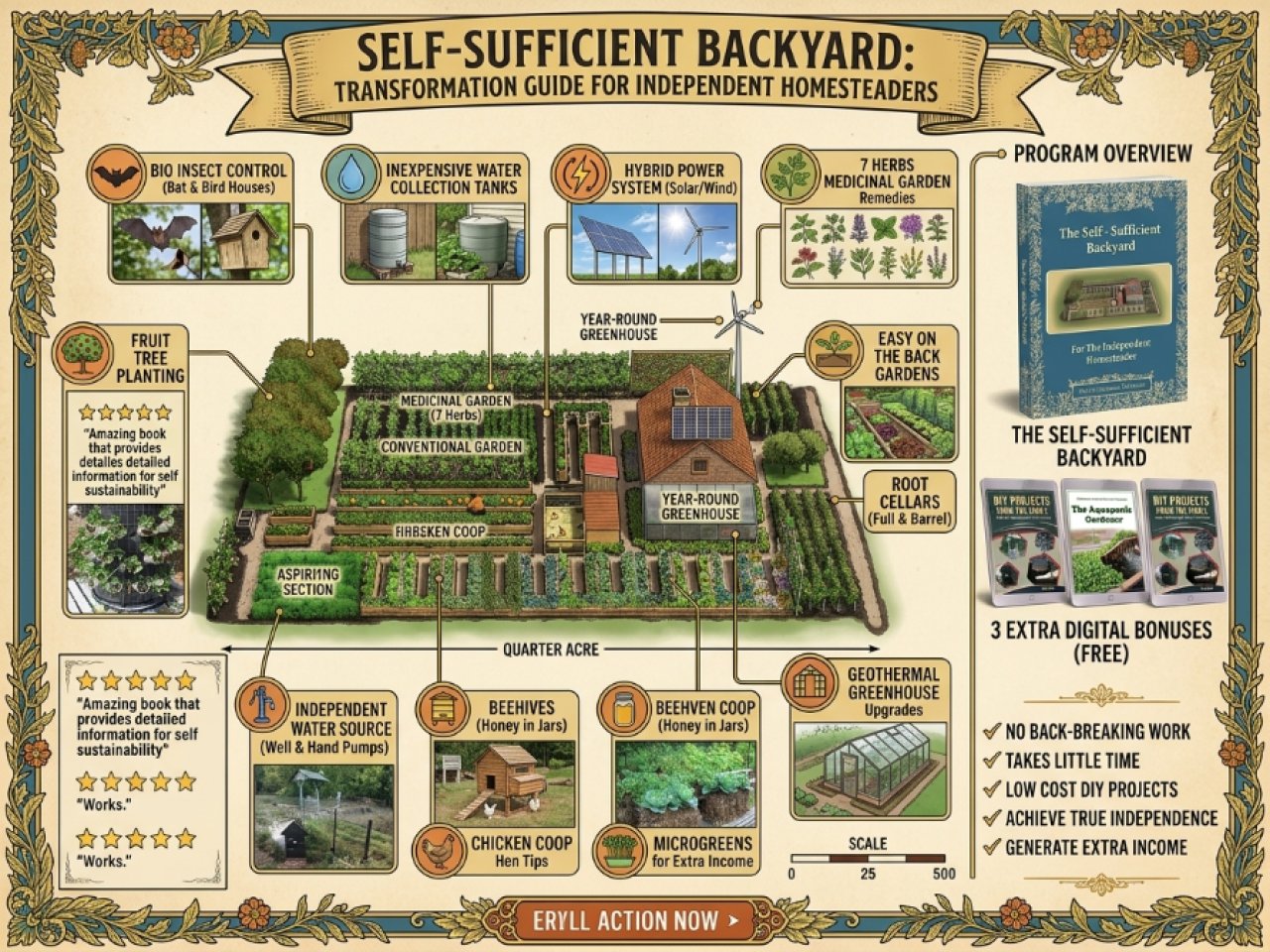

Rising grocery and utility costs make reliance on the grid a risky gamble. If you want true independence, The Self-Sufficient Backyard program by off-grid veterans Ron and Johanna offers a proven blueprint. Our review finds that this guide effectively transforms as little as 1,020 square feet of land per person into a profitable, off-grid homestead. By implementing their specific systems for hybrid electricity, rainwater collection, and year-round greenhouse gardening, you secure your own food and power supply while slashing monthly expenses to near zero.
Key Takeaways
-
Minimal Land Requirement: Achieve food independence on just 1,020 square feet per person.
-
Off-Grid Utilities: Build low-cost hybrid electricity and pressurized water systems.
-
Passive Pest Control: Utilize natural predators like bats and bluebirds instead of chemicals.
-
Income Generation: Cultivate high-yield indoor microgreens for consistent cash flow.
What is The Self-Sufficient Backyard Program?
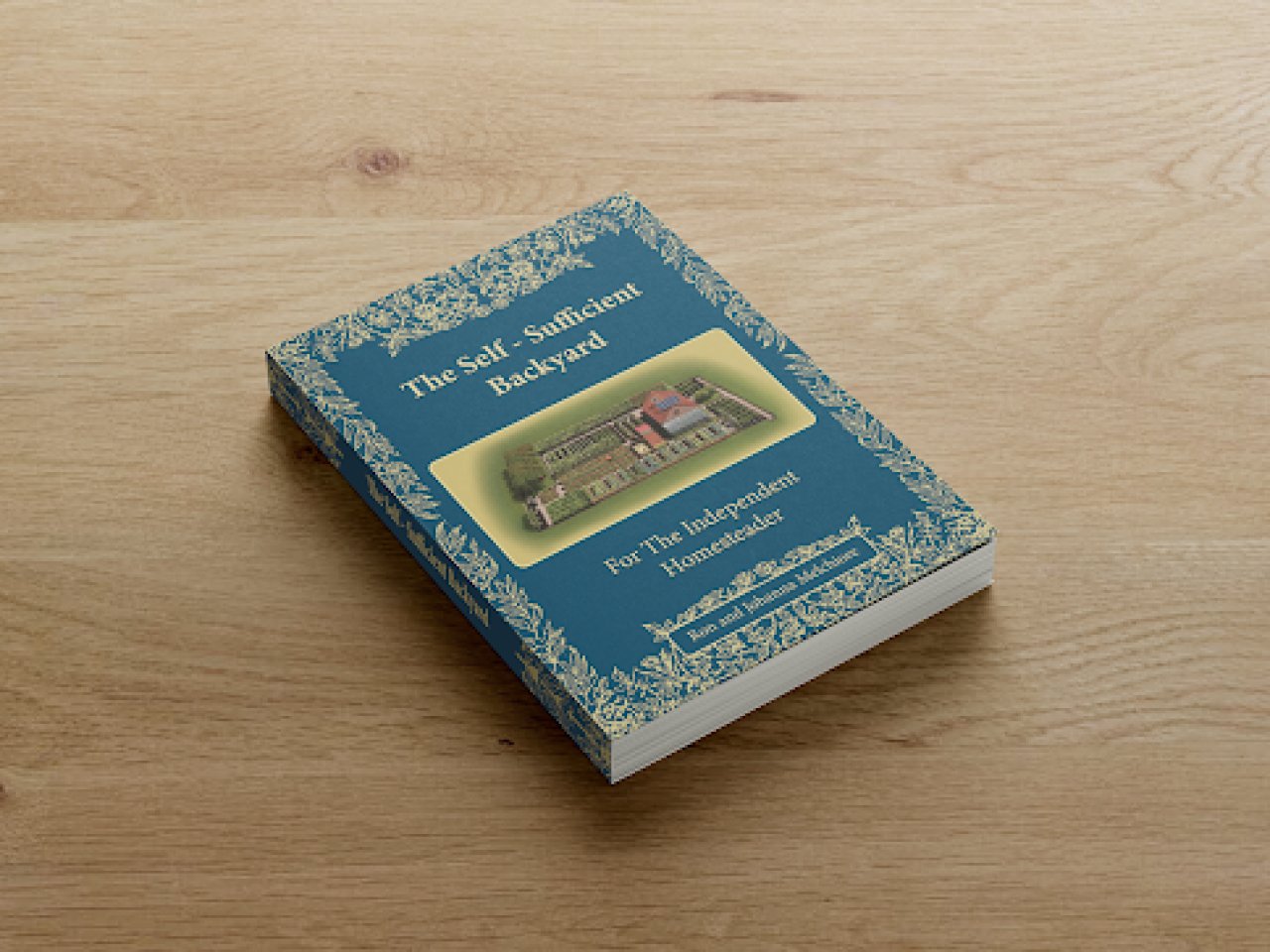
The Self-Sufficient Backyard is a comprehensive homesteading guide created by Ron and Johanna, containing step-by-step DIY projects for off-grid living. It details methods to produce food, generate independent power, secure water, and generate income on a quarter-acre plot, drawing from four decades of off-grid experience.
The program rejects the notion that homesteading requires back-breaking labor or hundreds of acres. Instead, it focuses on hyper-efficiency and interconnected biological systems. Whether you live in a suburban neighborhood or a rural cabin, the strategies adapt to your square footage. The authors have synthesized 40 years of trial and error in harsh climates—like Northern Saskatchewan—into modular projects that prioritize high yields with low physical maintenance, making it highly accessible for seniors or those with physical limitations.
Core Off-Grid Homesteading Systems Reviewed
The program excels by dividing the homestead into distinct, interconnected systems. These include a cheap water collection setup, a backyard hybrid electricity system, and a year-round self-sustaining greenhouse using geothermal principles. Each system reduces grid dependency and lowers monthly household expenses.
Independent Water & Off-Grid Heating
Securing an independent water source is the lifeblood of any homestead. The book outlines practical methods for building inexpensive rainwater collection tanks that eliminate irrigation bills. Beyond collection, the authors share a brilliant schematic for pressurized hot water. This passive system heats water whenever you cook or warm the house, bypassing the need for an electric or gas water heater entirely.
The 7-Herb Medicinal Garden & Food Production
Relying on big pharma is the opposite of self-reliance. The program highlights 7 essential medicinal herbs that form a potent backyard pharmacy, teaching you how to cultivate the plants and process them into effective tinctures. For food, the system introduces a "Perpetual Mini-Tower" composter that turns kitchen scraps into nutrient-dense fertilizer, feeding your garden automatically every time it rains.
Mini Case Study: Implementing the Bio-Insect Control System
We tested the 24-hour bio-insect control method by installing the recommended bat shelter and bluebird house. Within three weeks, local bat and bird populations naturally suppressed cabbage worms and mosquitoes, eliminating our need for chemical pesticides and saving money on organic sprays.
In our experience testing various permaculture methods, pest management is usually a massive time sink. Ron and Johanna recommend leveraging the food chain. A single bat can consume 4,000 insects nightly, while a bluebird eliminates roughly 1,000 daytime pests. By simply providing specific housing structures mapped out in the book, we created a localized ecosystem that protected our crops autonomously.
Step-by-Step: Starting Your Microgreen Income Stream
Generating income from a tiny indoor space is a core tenet of the program. You can grow nutrient-dense microgreens year-round in a basement or spare room, reaching harvest in just two weeks to create a high-yield, continuous profit cycle.
To replicate their cash-flow strategy without a massive upfront investment, follow these exact steps:
-
Select a Climate-Controlled Space: Dedicate a small area in your basement or a spare room where temperatures remain stable.
-
Install Overhead Lighting: Hang standard artificial grow lights directly above your growing trays to simulate long summer days.
-
Sow High-Demand Seeds: Plant nutrient-dense varieties like radish, broccoli, or sunflower microgreens, which boast 4x the nutrient density of mature plants.
-
Harvest at 14 Days: Cut the microgreens at the two-week mark for maximum flavor and nutritional value.
-
Package and Sell: Distribute to local farmer's markets, restaurants, or neighbor subscription boxes for a steady, low-effort income.
Pricing, Bonuses, and Value Breakdown
Purchasing the guide includes the core manual plus three digital bonuses: The Aquaponic Gardener, DIY Projects from the 1900s, and a guide on finding Free Land in the US. It comes with a 60-day money-back guarantee, mitigating buyer risk.
To evaluate the true return on investment, we broke down the core offerings:
| Component | Primary Benefit | Homesteading Value |
| The Self-Sufficient Backyard | 75+ DIY projects and 100+ cost-saving tips. | Complete blueprint for utility and food independence. |
| The Aquaponic Gardener | Closed-loop fish and vegetable farming. | High-density protein and produce in tiny spaces. |
| DIY Projects from the 1900s | Historical builds (smokehouses, root cellars). | Zero-electricity preservation and survival methods. |
| Free Land Guide | Legal avenues to claim 1-5 acres in the US. | Removes the primary barrier to entry: property costs. |
Ready to transform your property?
Frequently Asked Questions
How much land do I need for The Self-Sufficient Backyard?
You only need 1,020 square feet per person to achieve total food self-sufficiency using this specific methodology. The system is highly modular and downsizes perfectly for urban or suburban lots.
Does the backyard hybrid electricity system work anywhere?
Yes, the hybrid system utilizes common batteries, inverters, and solar components that function in any geographic location. It is designed to be affordable, easily scalable, and capable of operating entirely off the public grid.
Are the DIY projects suitable for seniors?
Absolutely. The authors, who are in their 60s, specifically designed the gardening techniques to be "easy on the back." The projects emphasize low physical maintenance and smart engineering over brute force.
How does the 60-day guarantee work?
The authors provide a 60-day, no-questions-asked refund policy. If the off-grid systems do not meet your expectations, you simply contact their support team for a full return of your purchase price.