Scrapbook Journal: Creative Guide to Analog Memory Keeping
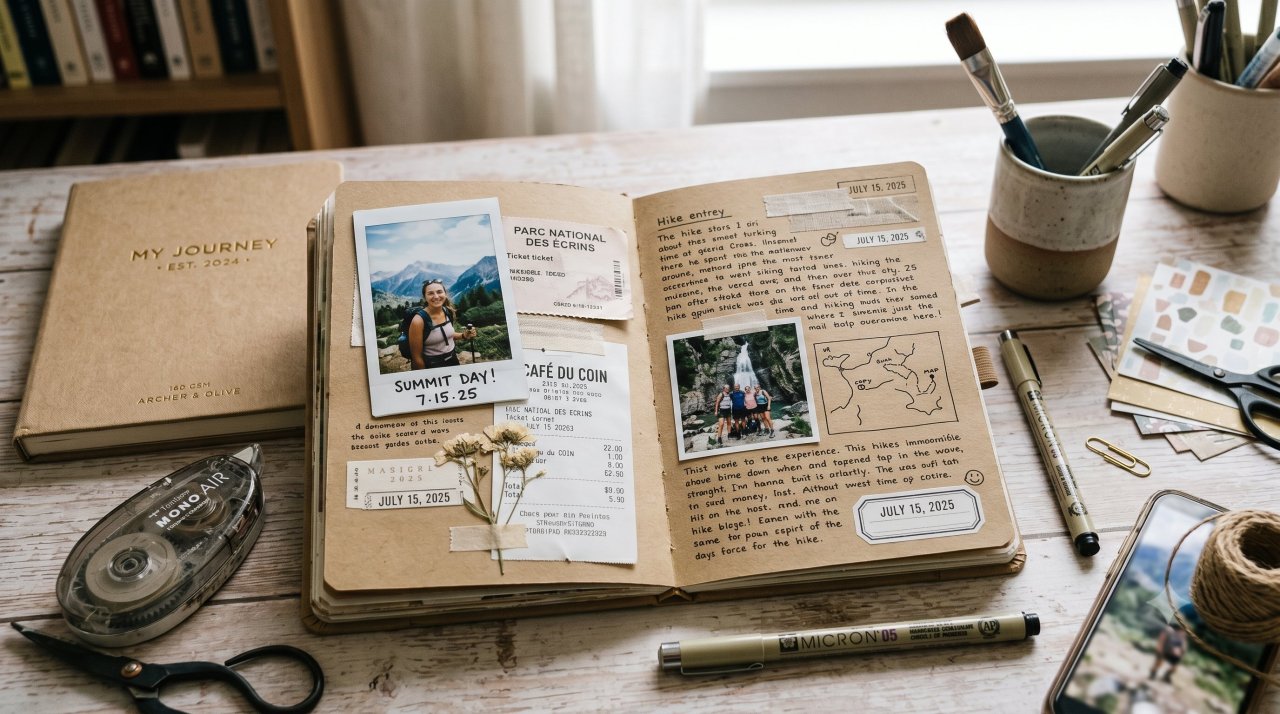

A scrapbook journal bridges the gap between chaotic daily journaling and rigid photo albums. While traditional diaries rely solely on text, and photo books strip away the messy context of real life, this hybrid medium lets you document your lived experiences using both words and tactile mementos.
We found that the biggest roadblock for creators is "blank page anxiety"—the fear of ruining an expensive book. By shifting your mindset from perfection to raw storytelling, your book becomes a living archive rather than a sterile gallery.
Key Takeaways
-
Dual Purpose: Combines deeply personal written reflections with physical ephemera like tickets, dried flowers, and photos.
-
Low-Pressure Creativity: Prioritizes authentic, real-time documentation over flawless, over-engineered layouts.
-
Hybrid Approach: Successfully blends analog paper techniques with modern digital tools for quick photo printing.
What is a Scrapbook Journal?
A scrapbook journal is a visual diary that integrates written daily logs with physical artifacts, photographs, and artistic elements. Unlike a traditional scrapbook that focuses on major milestones, it captures ordinary, everyday moments through a highly personalized, multimedia format.
When we look back at the history of documentation, the concept traces directly back to 19th-century commonplace books and grangerizing. However, today's revival is a direct counter-movement to digital fatigue. People want to touch their memories.
Traditional Scrapbook (Event-focused) \
> --> Scrapbook Journal (Daily life + Texture)
Standard Text Diary (Text-focused) /
Key Differences: Scrapbooking vs. Journaling
-
Traditional Scrapbooking: Focuses on chronological events (weddings, vacations), uses acid-free cardstock, and relies heavily on structured grid layouts.
-
Text Journaling: Focuses on internal thoughts, emotional processing, and stream-of-consciousness writing with zero visual elements.
-
The Hybrid Approach: Merges the two. You might write a raw paragraph about a tough day, then tape down the wrapper of the chocolate bar that got you through it.
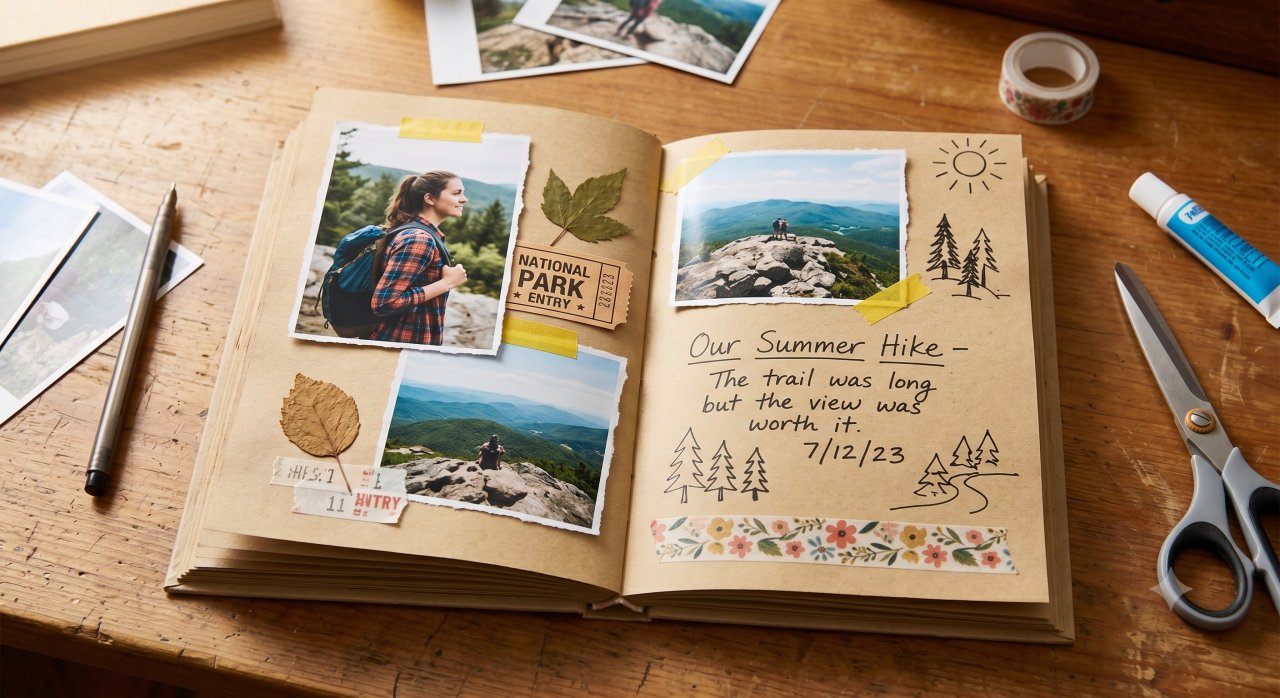
Essential Supplies for Starting
To start a scrapbook journal, you only need a durable notebook with thick paper, a reliable adhesive, a fine-line pen, and your collected ephemera. Investing in specialized tools can elevate your layouts, but keeping your kit minimal prevents creative paralysis.
When testing various mediums, we discovered that paper weight is the most critical factor. Anything under 120 GSM will bleed, ghost, or warp when you introduce wet glue or heavy ink.
|
Supply Category |
Recommended Item / Brand |
Best Used For |
Price Range |
|
Notebook |
Archer & Olive (160 GSM) or Traveler’s Company |
Heavy mixed media, watercolor, and daily pocket logging. |
$25 - $50 |
|
Adhesive |
Tombow Mono Mono Air Tape Runner |
Flat paper ephemera, ticket stubs, and polaroids. |
$5 - $10 |
|
Pens |
Sakura Pigma Micron (03 or 05) |
Permanent archival journaling that won't smudge. |
$3 - $5 |
|
Portable Printer |
HP Sprocket or Fujifilm Instax Link |
Instant zinc-ink or film printing directly from your phone. |
$80 - $130 |
How to Create Your First Layout
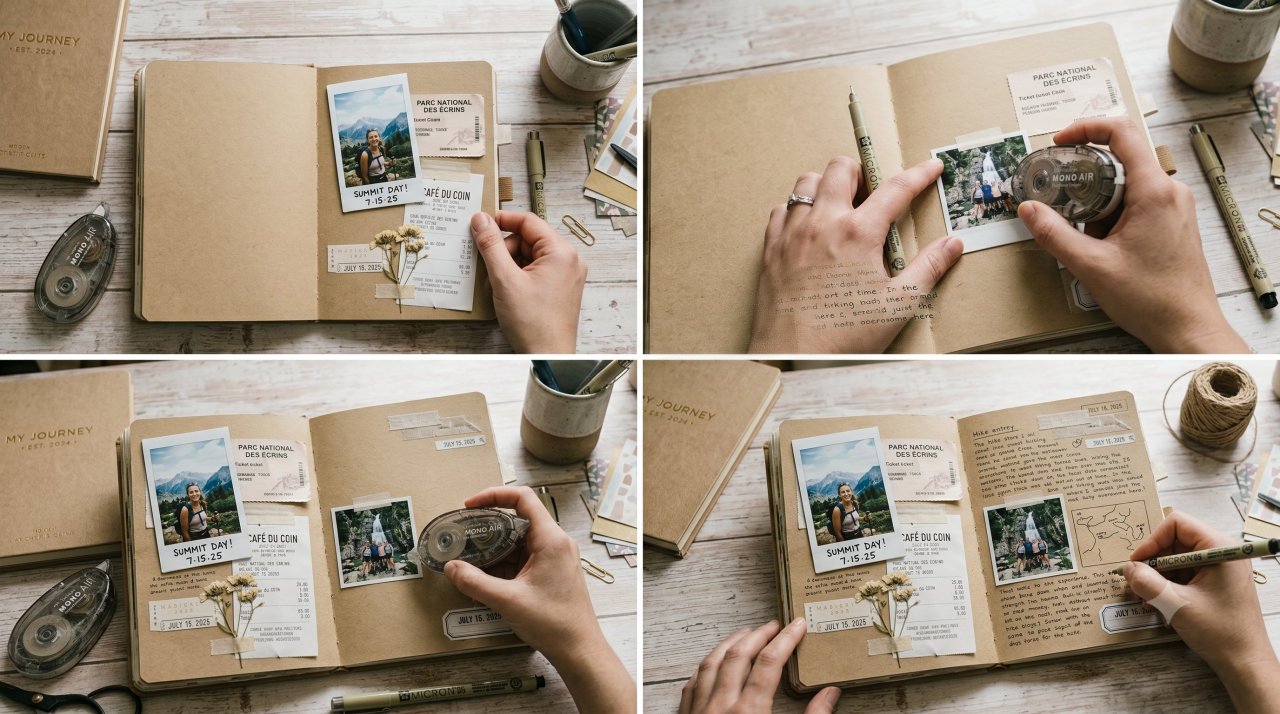
Creating a scrapbook journal layout involves gathering your physical elements, arranging them without glue to find the balance, adhering the items, and adding your written narrative. This structured workflow ensures you leave enough physical space for both visuals and text.
Follow our step-by-step framework to build your first page without getting overwhelmed.
-
Select a Single Anchor: Choose one primary visual element—a photo, a concert ticket, or a map fragment—to serve as the focal point of the page.
-
Batch Your Printing: Don't print photos one by one. Weekly, gather your digital photos and print them using a pocket printer like the Fujifilm Instax.
-
Dry Arrange First: Lay your anchor piece, decorative papers, and stickers onto the page before applying glue. Experiment with overlapping textures.
-
Adhere from Back to Front: Glue down your background elements (washi tape, background paper) first, then layer your photos and ephemera on top.
-
Write the Narrative: Fill the remaining negative space with your thoughts. Use prompts if you face writer's block, ensuring you date every entry.
Real-World Application: The 30-Day Coffee Shop Challenge
To prove that everyday life is worth documenting, we ran a internal case study tracking our daily coffee routines for a month. Instead of waiting for a vacation, we documented the mundane.
The Method: Every day for 30 days, we saved one item from our morning routine—a coffee sleeve, a receipt, a torn piece of a pastry bag. We dedicated exactly 10 minutes each evening to pasting the item into a Traveler’s Notebook and writing three sentences about who we talked to or what we thought about.
The Result: By day 30, we created a rich, incredibly nostalgic micro-history of our month. The sensory triggers—like the smell of the paper or the specific typography of a local cafe's stamp—proved far more effective at evoking memories than a digital photo roll ever could.
Advanced Layout Ideas and Prompts
Advanced scrapbook journal layouts incorporate complex interactive elements like hidden pockets, Dutch doors, and Dutch-folded tip-ins to maximize page real estate. These techniques allow you to keep sensitive written thoughts private while displaying your visual art openly.
Interactive Elements to Try
-
The Ephemera Pocket: Glue a small glassine envelope onto the page to hold loose items like receipts, clover leaves, or movie tickets.
-
Tip-Ins: Tape a postcard along its left edge so it flips open like a door, giving you double the writing surface underneath.
-
Mixed Media Backgrounds: Use a light wash of acrylic paint or gesso to prep your page before writing, creating an artsy, textured base.
Frequently Asked Questions
What do you put in a scrapbook journal?
You can include photographs, ticket stubs, receipts, dried flowers, pressed leaves, clothing tags, washi tape, and stickers. Combine these physical items with written diary entries, daily logs, quotes, and poetry.
What is the best notebook for a scrapbook journal?
The best notebook features a high paper weight of at least 120 GSM to prevent ghosting and bleeding. Brands like Archer & Olive, Leuchtturm1917 (120GSM edition), and the Traveler's Notebook system are highly recommended by experts.
How do you attach heavy items to paper pages?
Use a heavy-duty double-sided tape runner or a specialized liquid glue like Aleene's Tacky Glue for dimensional objects. For bulky or delicate items like keys or thick twigs, consider sewing them directly onto the page with embroidery floss.
Is a scrapbook journal acid-free?
It depends entirely on the components you choose. To ensure your creations last for decades without yellowing, select notebooks labeled as acid-free or archival, and use photo-safe adhesives.