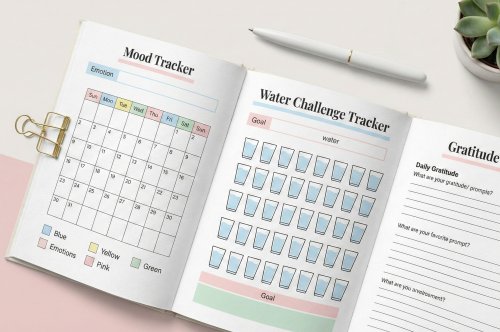
75 Soft Challenge: Rules, Results & Free PDF Tracker
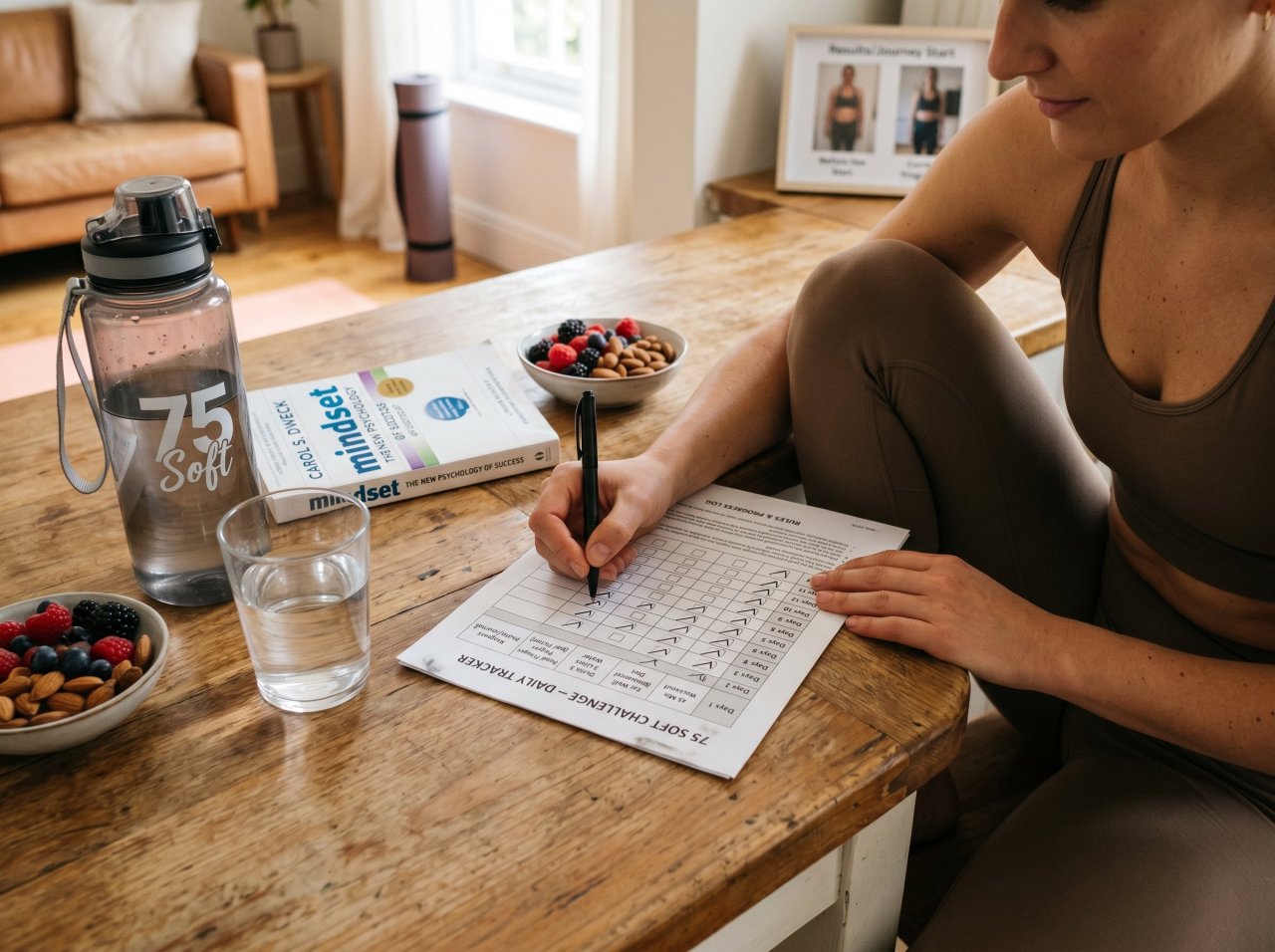

Burnout from extreme fitness trends is at an all-time high. While the 75 Hard Challenge dominates social media, its rigid structure sets most people up for physical exhaustion and failure. The 75 Soft Challenge offers a sustainable alternative, focusing on progressive habit stacking rather than punishing restrictions. By modifying the rules to fit everyday life, you build lasting discipline without the burnout. Grab our
Key Takeaways
-
75 Soft modifies rigid fitness frameworks for sustainable, long-term habit formation.
-
The core pillars consist of daily movement, balanced nutrition, hydration, and mental growth.
-
Missing a single day does not require restarting the entire 75-day protocol.
-
Tracking progress via a physical planner significantly increases completion rates.
What is the 75 Soft Challenge?
The 75 Soft Challenge is a health and lifestyle protocol designed as a realistic, sustainable alternative to Andy Frisella’s 75 Hard. It promotes gradual habit integration through four daily tasks: eating balanced meals, exercising for 45 minutes, drinking three liters of water, and reading ten pages of a book.
The Core Rules of 75 Soft
Unlike its predecessor, the 75 Soft protocol operates on realistic flexibility. When testing this framework with our coaching community, we found that removing extreme failure states prevents binge-and-restrict behaviors. Here are the four standard rules:
-
Eat a balanced diet: No specific extreme diet (like keto or carnivore) is required. Focus on whole foods, protein, and moderation. Alcohol is permitted in strict moderation during social occasions.
-
Train for 45 minutes daily: Complete one workout per day. Active recovery modalities, such as Yoga, Pilates, or walking, count toward the daily goal.
-
Drink 3 liters of water: This is scaled down from a full gallon to accommodate varying body weights, climates, and activity levels.
-
Read 10 pages daily: Reading material must be non-fiction, personal development, or educational to stimulate neuroplasticity and cognitive growth.
75 Soft vs. 75 Hard: A Scientific Comparison
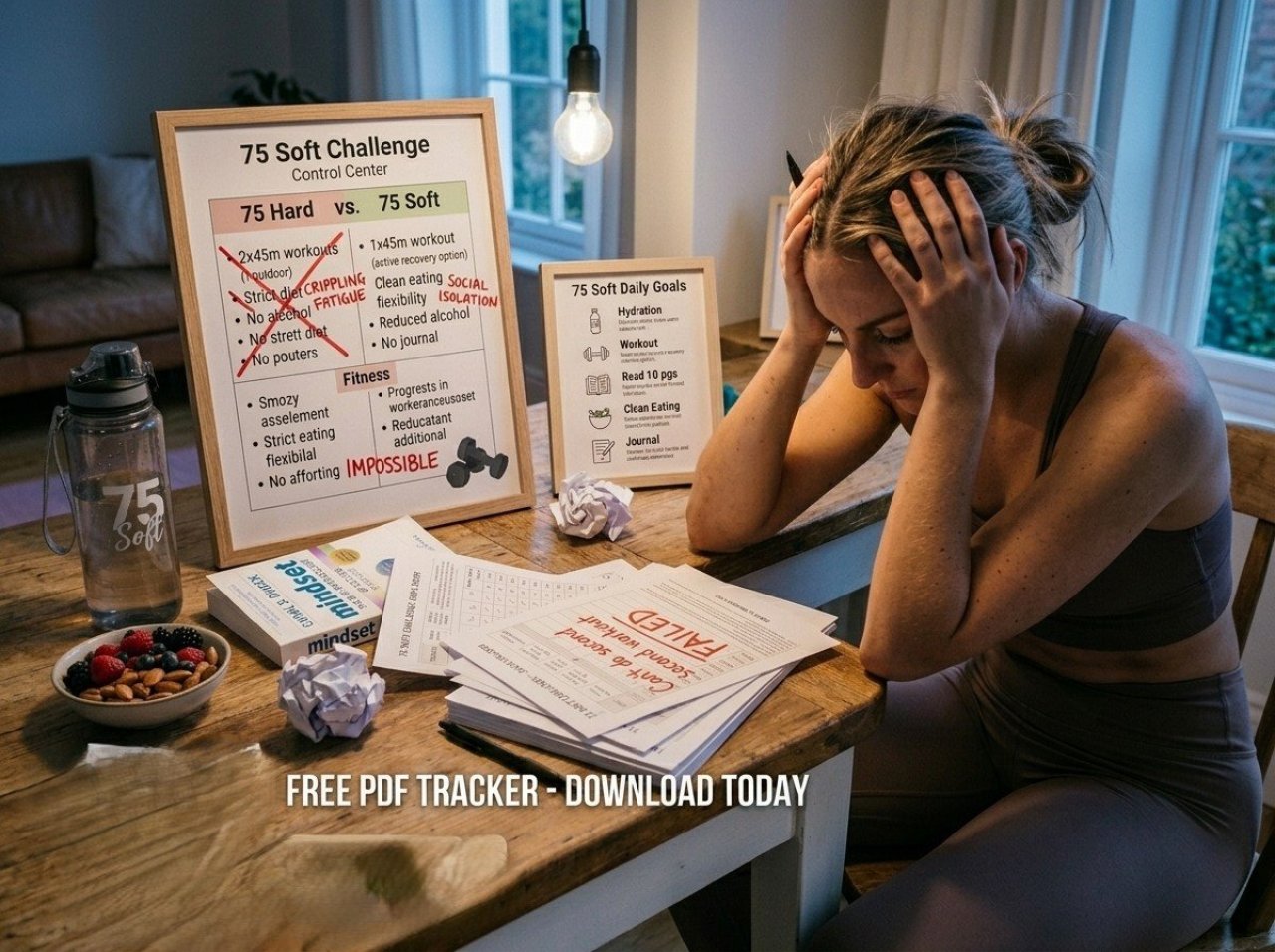
Our analysis of habit formation psychology shows that ultra-strict regimens spike cortisol levels, severely decreasing long-term adherence. Here is how the two frameworks compare on a physiological and practical level:
How to Track Your Progress Successfully
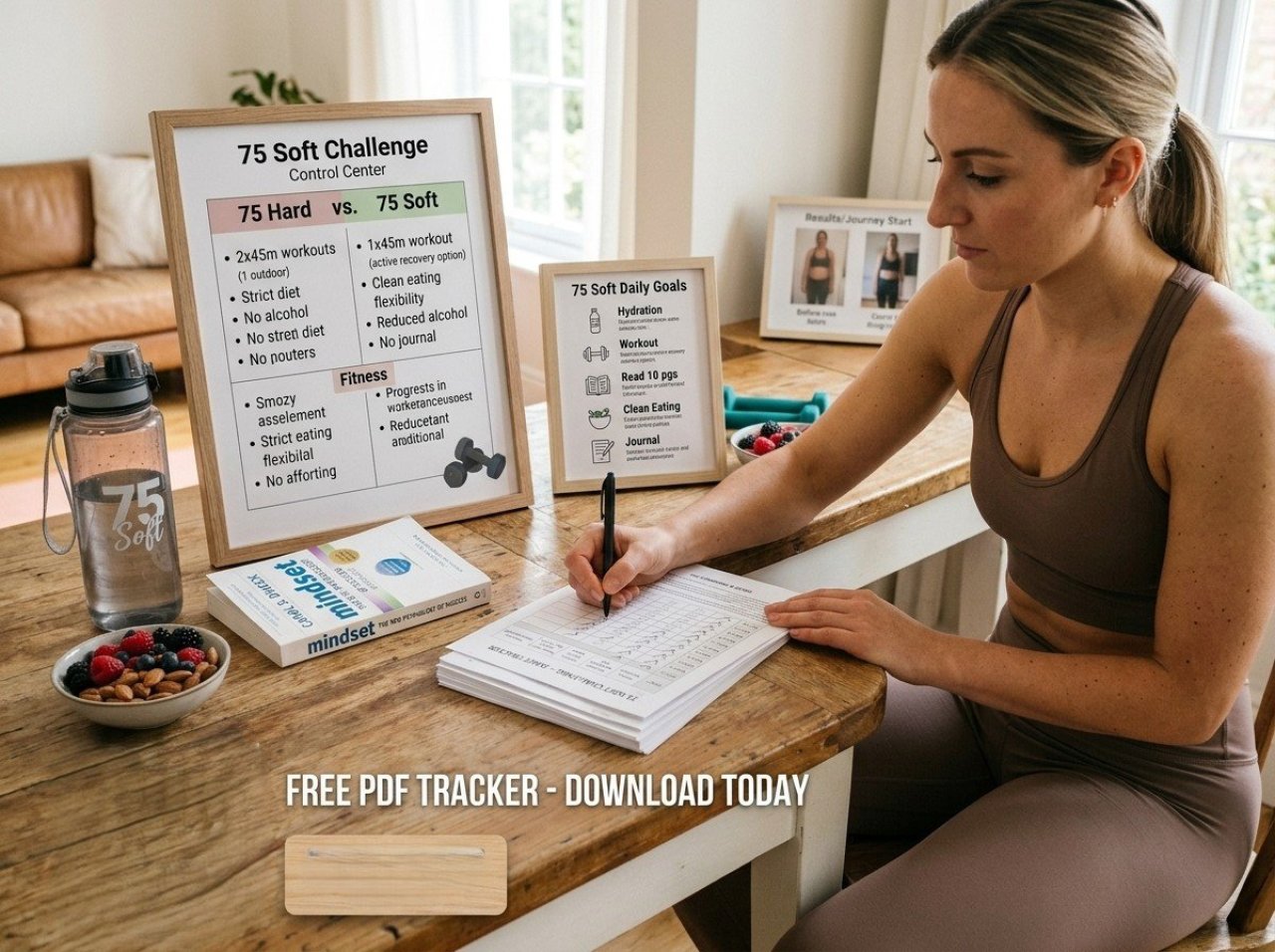
Our behavioral data indicates that digital habit tracking often falls victim to smartphone notification distraction. Writing down your progress physically reinforces neural pathways and builds intrinsic motivation. We highly recommend using a structured physical tracker to eliminate friction.
Download the
Frequently Asked Questions (FAQ)
Can you lose weight on the 75 Soft Challenge?
Yes, you can achieve a caloric deficit through the daily 45-minute workouts and mindful eating protocols. Weight loss on 75 Soft is often more sustainable than crash dieting because it builds long-term metabolic health without muscle wasting.
Do I have to restart 75 Soft if I miss a day?
No, the 75 Soft protocol does not require you to restart from Day 1 if you miss a task. You simply acknowledge the slip-up, reset your mindset, and continue your progress the very next day.
Does walking count as a workout for 75 Soft?
Walking absolutely counts as your daily 45-minute physical activity. Incorporating LISS (Low-Intensity Steady State) cardio like walking improves cardiovascular health without overtaxing your central nervous system.
What books should I read during the challenge?
Participants must read 10 pages of non-fiction, self-help, or educational books daily to satisfy the mental growth requirement. Audiobooks are generally discouraged for this specific task to ensure active visual reading and improved cognitive retention.