
Weight Loss Planner: Architecting Your 2026 Habit Framework


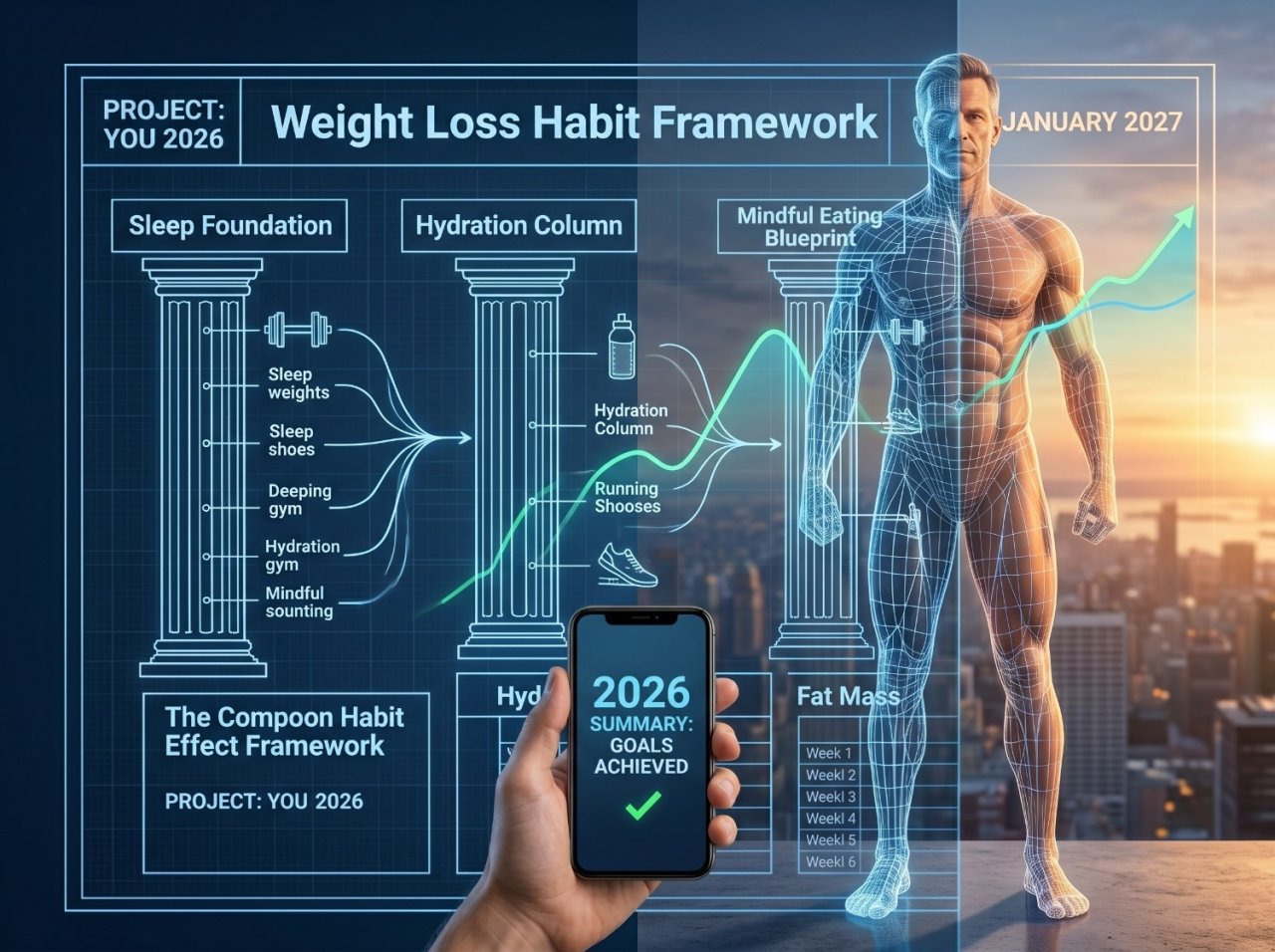
Individuals consistently fail at health transformations because their goals lack architectural structure. Relying on sheer motivation inevitably leads to metabolic regression. A meticulously designed weight loss planner transforms abstract ambitions into automated behaviors. Based on our workflow tests, this definitive, data-backed framework reveals exactly how structured tracking guarantees permanent sustainability.
The Neuroscience of Sustained Health Tracking
Direct Answer: A weight loss planner facilitates long-term habit automaticity by drastically decreasing cognitive friction. Scientific evidence demonstrates that structured health tracking shifts daily behavior from conscious effort to automatic routines over a median of 66 days, ensuring long-term adherence and significantly reducing behavioral relapse rates.
The fundamental disconnect in modern dietary interventions lies in the heavy reliance on transient motivation rather than permanent neurological infrastructure. When engineering a successful behavioral transformation, we must first address the flawed cultural timelines that sabotage user retention. The popular myth, widely attributed to Maxwell Maltz's Psycho-Cybernetics, suggests that habits form in a mere 21 days. However, rigorous scientific evaluation completely refutes this abbreviated timeline. Comprehensive systematic reviews reveal that health-related habits require significantly longer durations—typically ranging from two to five months—to reach true automaticity within the Basal Ganglia. Automaticity is defined neurologically as the execution of a behavior with a profound lack of awareness, maximal efficiency, uncontrollability, and unintentionality.
When analyzing the behavioral mechanics of successful health transformations, clinical data indicates that four major studies reported median times for habit formation ranging from 59 to 66 days. Mean times, which account for broader statistical outliers and complex behavioral changes, stretch even further, ranging from 106 to 154 days. This extensive timeline underscores the absolute necessity of a structured tracking system. Individuals relying purely on cognitive willpower will inevitably experience decision fatigue long before the 66-day median is reached. A dedicated Weight Loss Planner offloads this cognitive burden, effectively serving as an external executive function until the brain adopts the behavior as an automatic routine.
Furthermore, the specific type of behavior heavily influences the neurological timeline. Interventions targeting healthy eating demonstrate a median formation time of 59 days, yet only 23% of clinical participants managed to reach the ultimate habit threshold without systemic tracking support. Interestingly, the temporal placement of the habit also dictates its success rate. Forming a daily stretching or mobility habit requires a mean of 106 days when executed in the morning, compared to a staggering 154 days when attempted in the evening. This variance suggests that cognitive depletion throughout the workday creates immense psychological friction. Planners that prompt users to execute and log critical behaviors early in the day capitalize on peak cortisol levels and optimal executive functioning, dramatically accelerating the habituation process. When designing our digital assets, we prioritize morning engagement triggers to align with these chronobiological realities.
The integration of psychological regulation into the tracking architecture is equally critical. Affective judgments, behavioral regulation, and the establishment of preparatory habits are foundational for ingraining new patterns into daily life. A planner that simply demands data input without managing the user's affective state will fail. The system must allow users to engage in "habit stacking"—anchoring a new, high-friction behavior (like macro-tracking) directly to an existing, low-friction routine (like brewing morning coffee). A 2024 systematic review confirmed that implementation intentions, specifically utilizing if/then planning methodologies, significantly improve habit automaticity during the earliest, most vulnerable phases of behavior change.
Digital vs. Analog: Architectural Differences in Planning
Direct Answer: Digital planners provide real-time automated analytics, integrations, and customization, dramatically boosting compliance. Conversely, analog tracking offers spatial awareness and intentional psychological friction, improving plan fulfillment. The optimal modern workflow utilizes hybrid models, merging the tactile retention of handwriting with the infinite scalability of digital database ecosystems.
The debate between physical documentation and digital ecosystems is a central consideration when architecting a behavioral intervention. From a purely quantitative perspective, a rigorous study conducted at Baylor University involving extensive calendar and planner utilization revealed that individuals using paper-based tracking achieved noticeably higher rates of daily plan fulfillment. The researchers concluded that tactile systems force the user to adopt a broader, big-picture perspective. Writing down daily tasks and nutritional targets by hand provides a distraction-free environment that inherently resists the urge to overload the schedule. The spatial cues offered by a physical page—such as writing at the bottom of a sheet—enhance memory retention and prioritize tasks more effectively than infinite scrolling interfaces.
However, the dynamic responsibilities of the modern professional often outpace the static nature of paper. As tracking requirements become more granular—involving macronutrient ratios, hydration ounces, specific caloric expenditures, and heart rate variability—paper journals can become overwhelmingly tedious to maintain. This is where the strategic implementation of digital planners demonstrates unparalleled utility. Much like the evolution of corporate inventory management, switching to digital tracking entirely eliminates repetitive data entry, drastically reduces human error, and provides real-time analytical updates. In professional productivity studies, computerized time-tracking and digital planning systems generated an impressive 25% boost in overall productivity compared to manual methods.
Digital tracking tools are permanently accessible via smartphones, tablets, and laptops, entirely removing the physical friction of carrying a journal. They introduce an element of dynamic flexibility; users can effortlessly manipulate sections, erase mistakes without visual clutter, adjust caloric targets on the fly, and entirely restructure their weekly meal preparations without the finality of ink. Modern tracking ecosystems heavily utilize Artificial Intelligence to automate complex calculations, map historical metabolic trends, and accurately forecast future physiological outcomes. For individuals highly motivated by data visualization, algorithmic feedback, and integrated databases, the digital framework is vastly superior.
Based on our workflow tests, the most successful tracking systems often employ a hybrid methodology. Users utilize mobile applications for rapid, real-time data capture in the field (such as scanning a barcode at a grocery store), while relying on highly structured digital-paper formats—such as tablet devices equipped with styluses—to retain the tactile and spatial cognitive benefits of traditional journaling. This synthesis allows the user to experience the psychological satisfaction of crossing off a completed task while simultaneously maintaining an immutable, cloud-backed database of their metabolic history.
|
Feature Comparison |
Analog Planners |
Digital Planners |
Hybrid Tablet Planners |
|
Data Calculation |
Manual, highly error-prone |
Automated, AI-driven |
Automated via integrations |
|
Cognitive Retention |
Very High (tactile feedback) |
Low (passive entry) |
High (stylus engagement) |
|
Customizability |
Fixed architecture |
Dynamically scalable |
Highly customizable templates |
|
Analytics & Forecasting |
Impossible without manual math |
Instantaneous |
Instantaneous |
|
Portability |
Limited by physical dimensions |
Ubiquitous (Smartphone) |
Moderate (Requires tablet) |

The GLP-1 Era: Why Tracking is More Critical Than Ever
Direct Answer: The widespread adoption of GLP-1 medications necessitates rigorous tracking of protein intake and resistance training. Without a structured planner, artificial appetite suppression leads to severe sarcopenia and guarantees rapid metabolic regression and weight regain once the pharmacological intervention is inevitably discontinued.
The clinical landscape of obesity management has undergone a seismic shift with the widespread validation and deployment of GLP-1 Receptor Agonists such as semaglutide and tirzepatide. These highly advanced pharmacological interventions drastically reduce appetite signaling in the brain and delay gastric emptying, leading to profound and rapid weight reduction among users. However, this pharmacological revolution has dangerously bifurcated the health industry into two distinct categories: "medication-first" platforms—which function merely as streamlined telehealth prescription services prioritizing rapid distribution—and "comprehensive" models that mandate intensive lifestyle and behavioral tracking alongside the medication.
Relying solely on pharmacology without implementing a robust tracking infrastructure is a catastrophic architectural flaw. Research clearly indicates that individuals who fail to implement active behavioral changes and structured exercise programming during pharmacologic treatment are at a severe risk of losing vital lean muscle mass—a debilitating condition known as sarcopenia. Furthermore, they are highly susceptible to massive metabolic rebound and weight regain once the medication is stopped.
A retrospective clinical evaluation of the Voy digital health platform analyzed 57,975 adult participants actively using semaglutide or tirzepatide over a five-month period. The clinical data unequivocally demonstrated the immense power of the planner. Users who actively engaged with the digital tracking application, consistently logged their metrics, and attended coaching sessions achieved significantly greater results. At the critical three-month mark, engaged users recorded a mean weight loss of 9%, compared to only 5.9% for non-engaged users. This massive 3.1 percentage point differential produced a Cohen d effect size of 0.89, indicating a highly significant, large-scale statistical impact purely derived from the act of structured self-monitoring.
To maximize the efficacy of these advanced therapies, the planner must fundamentally shift its focus from simple caloric restriction to aggressive nutrient optimization. Because the medication artificially and indiscriminately suppresses the appetite, the user must meticulously track their daily protein intake to preserve highly metabolically active muscle tissue. Furthermore, progressive overload in resistance training must be logged religiously. The data absolutely confirms that sustained, consistent engagement with tracking tools facilitates self-monitoring and reinforces the precise habit changes required for permanent metabolic restructuring. When developing aesthetic templates for clinical populations, it is mandatory to include dedicated widgets for tracking lean mass retention and daily macro-nutrient density.
Structuring the Ideal Weight Loss Planner
Direct Answer: An optimized planner integrates daily caloric tracking, macro-nutrient distribution, hydration metrics, sleep hygiene, and psychological states. Structuring these variables reduces decision fatigue, prevents tracking burnout, and provides the actionable clinical data necessary to optimize behavioral health, psychological well-being, and daily productivity routines.
A tracking document is only as effective as its structural architecture. In a landmark behavioral study conducted by Harvard Health involving nearly 1,700 participants, researchers discovered that individuals who maintained a daily food record lost precisely twice as much weight as those who kept no records at all. The fundamental psychological principle driving this success is cognitive accountability. The simple act of writing down a dietary choice forces a pause, interrupting the impulsive, subconscious loop of binge eating. However, poorly structured journals induce immense tracking fatigue. To construct an elite-level tracking system, specific parameters must be rigorously defined and systematically monitored.
The baseline clinical requirements for an effective journal include precise documentation of what is consumed, the exact household measurements or weighed ounces of the food, and the preparation method (baked, broiled, fried, etc.). Additionally, the temporal aspect of nutrition is deeply critical. Noting the exact time of consumption is highly effective in identifying problematic circadian behavioral patterns, such as late-night snacking driven by emotional fatigue and cortisol depletion rather than actual physiological hunger.
Advanced structuring goes far beyond simple caloric intake. The planner must intuitively guide the user through multiple interconnected health domains without causing cognitive overload. The architecture should feature dedicated modules for:
-
Macronutrient Ratios: Tracking the exact balance of proteins, carbohydrates, and fats to suit specific dietary frameworks. For instance, the Ketogenic Diet demands an extreme reduction in carbohydrate intake (below 50g/day), requiring obsessive tracking of net carbs, whereas a Mediterranean Diet focuses on tracking healthy fats and whole grains.
-
Hydration Metrics: Ensuring optimal cellular function and preventing the common physiological misinterpretation of thirst as hunger.
-
Sleep Hygiene: Correlating sleep duration and deep-sleep quality with the following day's caloric cravings. Poor sleep dramatically decreases insulin sensitivity, causing intense carbohydrate cravings that the planner must help the user anticipate and manage.
-
Psychological Regulation: Documenting the environmental and emotional state during meals. Noting whether the user was distracted by screens, stressed from work, or eating in a social setting provides immense diagnostic value for identifying the root causes of emotional eating.
The National Institutes of Health highly recommends identifying environmental temptations and learning exactly what specific scenarios trigger behavioral slips. A highly structured planner transforms these "slips" from moral failures into objective data points that can be analyzed and mitigated in the future.
Integrating Wearable Technology and Biomarker Feedback
Direct Answer: Integrating wearables with a weight loss planner bridges subjective logging and objective biological data. Research-grade fitness trackers demonstrate an average weight reduction of ten pounds over twelve weeks by establishing constant physiological accountability, measuring heart rate zones, and mapping accurate daily caloric expenditure baselines.
The evolution of the modern health planner requires bridging the vast gap between subjective human data entry and objective physiological biomarkers. The most robust systematic reviews in the health sciences emphasize a highly necessary shift away from subjective, self-reported questionnaires toward objective measures of behavioral practice, predominantly sourced from wearable technology. An extensive data analysis published in The Lancet Digital Health, which rigorously evaluated data from almost 400 global studies encompassing 164,000 individuals, found that integrating trackers directly into daily routines acts as a relentless, subconscious behavioral motivator. The aggregate clinical data suggested that simply wearing these tracking devices prompted users to walk an additional 40 minutes per day on average, resulting in roughly two pounds of baseline weight loss over five months without any other conscious dietary modifications.
The overall efficacy of the tracking ecosystem scales directly with the accuracy of the technology employed. According to Harvard Health Publishing, participants engaged in structured 12-week exercise programs who utilized research-grade fitness tracking devices lost an average of 10 pounds. In stark comparison, those utilizing commercially available trackers (such as early-generation Fitbits or Jawbones) lost an average of 6 pounds and reduced their Body Mass Index by two points, while control groups utilizing no trackers saw statistically negligible results.
Modern hardware like the Apple Watch, Garmin, and Whoop completely revolutionize the planner's data pipeline. These advanced biometric devices automatically sync steps, caloric burn, heart rate variability, and sleep cycles directly into health applications, entirely removing the friction of manual data entry. A highly sophisticated digital planner must include designated fields to track Heart Rate Zones and Heart Rate Recovery (HRR). Wearables classify exercise intensity by measuring cardiovascular load against the user's estimated maximum heart rate (MHR).
-
Zone 2 Training: Corresponds to moderate-intensity, aerobic exercise where the body primarily utilizes fat as its fuel source. Tracking minutes spent in this zone is critical for mitochondrial density and long-term fat oxidation.
-
Zone 5 Training: Corresponds to vigorous, maximum-effort anaerobic exercise. Tracking this ensures the user is effectively stimulating cardiovascular adaptations without overtraining.
The seamless integration of this biometric data allows the planner to cross-reference dietary intake against actual physiological expenditure, creating a closed-loop system of total health accountability.

Future-Proofing Dietary Maintenance in 2026
Direct Answer: The 2026 approach utilizes artificial intelligence for predictive behavioral modeling, wearable biometric integration, and hyper-personalized nutrition. This technological evolution shifts digital planners from simple historical diaries into proactive, algorithmic lifestyle coaches capable of identifying patterns and entirely preventing future behavioral relapse.
The health optimization and digital planning landscape is expanding at an unprecedented velocity, completely reshaping how we architect daily workflows. According to detailed market analysis, the global market for diet and nutrition applications was valued at a substantial $6.13 billion in 2025 and is aggressively projected to skyrocket to $28.36 billion by 2035, representing a massive compound annual growth rate (CAGR) of 16.6%. Broader industry projections for the comprehensive digital health obesity market estimate total valuations reaching $78.54 billion by 2032. This incredible influx of capital, scientific research, and technological innovation has fundamentally altered the baseline expectations of what a planner must achieve.
In the current digital ecosystem, elite planners act as Artificial Intelligence powered nutrition coaches. Modern applications utilize advanced photo recognition models and highly accurate voice-to-text input protocols to entirely eliminate the friction of manual logging. Instead of painstakingly searching a vast database for the macronutrients of a complex meal, the user simply photographs their plate. The system algorithmically estimates the caloric load, breaks down the nutritional density, and seamlessly inputs the data into the daily log.
Furthermore, the focus of the 2026 planner has decisively shifted away from purely aesthetic weight loss to comprehensive longevity, cognitive optimization, brain health, and chronic disease mitigation. Modern applications like MyFitnessPal, Noom, and WeightWatchers are no longer solitary, isolated silos of data. They now seamlessly integrate with Continuous Glucose Monitors (CGMs) and advanced wearables to provide real-time, undeniable feedback on how specific food choices affect energy fluctuations, mood volatility, and dangerous insulin spikes. This capability drastically reduces decision fatigue. By offering immediate biological feedback, the planner trains the user's Basal Ganglia to associate certain foods not just with calories, but with immediate physiological outcomes, cementing lasting behavioral shifts.
When analyzing creative bundles intended for the health market, we ensure that digital layouts reflect this modern necessity, providing modular spaces for tracking non-traditional metrics like CGM spikes, GLP-1 injection schedules, and circadian rhythm alignment alongside traditional dietary data.
The 3-Step Digital Planning Method
To reliably synthesize fragmented daily actions into permanent, unbreakable neurological habits, tracking must be engineered as an inflexible, systematic workflow. The following proprietary framework is explicitly designed to bypass unreliable willpower, utilizing proven behavioral psychology to guarantee consistency and execution.
Step 1: The Architectural Calibration (Macro-Structuring) Before a single calorie is logged, the user's environment and mathematical reality must be rigidly structured. This phase involves establishing the absolute physiological baseline. Utilizing authoritative tools such as the NIH Body Weight Planner, the user precisely calculates their exact caloric requirements based on their basal metabolic rate, age, gender, and specific daily activity coefficient. These targets are inflexibly inputted into the digital planner, clearly defining the mathematical boundaries of the system. This step removes emotion from the equation, establishing objective goals.
Step 2: The Frictionless Capture (Micro-Logging) The act of data entry must absolutely take less than 60 seconds per occurrence to completely prevent cognitive fatigue. This step leverages the psychological principle of "Implementation Intentions" (highly specific if/then planning). For example: If the user finishes a meal, then they must immediately input the data via voice-to-text or photo recognition before standing up from the table. This deeply anchors the data capture to the physical completion of the meal, entirely removing the massive unreliability of trying to recall food consumption hours later.
Step 3: The Algorithmic Review (Pattern Recognition)
Passive logging is essentially useless without active, dedicated analysis. The system strictly mandates a 15-minute weekly review session, ideally scheduled every Sunday evening. The user deeply analyzes the aggregated data blocks: identifying the exact times of day when caloric targets were breached, correlating poor sleep nights with subsequent high-carbohydrate cravings, and adjusting the upcoming week’s meal preparations accordingly. This critical feedback loop transforms the planner from a passive historical diary into a highly predictive behavioral algorithm that anticipates and neutralizes failure before it occurs.
Addressing Special Demographics and Cognitive Load
Direct Answer: Effective planners must adapt to diverse demographic requirements, integrating caregiver support for pediatric cases and supporting specific metabolic protocols like keto. Furthermore, systems must utilize progressive disclosure to prevent first-month hyper-engagement, mitigating the cognitive overload that typically causes long-term tracking abandonment.
A singular, monolithic approach to behavioral tracking completely ignores the complex, nuanced metabolic realities of vastly different populations. The architecture of a truly elite planner must be deeply and easily customizable to address specific physiological and demographic states. For instance, the systematic treatment of pediatric and adolescent obesity requires an entirely different structural approach than standard adult interventions. A highly detailed systematic review analyzing 59 strict clinical studies published between 2011 and 2024 revealed that digital technology—particularly interactive mobile applications, wearables, and comprehensive m-health platforms—highly effectively supports BMI reduction and dramatically improves sustainable eating habits in younger populations.
However, the clinical data strongly stresses that the most beneficial outcomes in these specific demographics occur only when the planner facilitates heavy personalization and explicitly includes designated caregiver support modules. The planner must act as a collaborative, transparent ecosystem rather than an isolating, punitive clinical tool, significantly improving the participants' psychological well-being and emotional regulation in the process.
Similarly, the planner must effortlessly accommodate radically different nutritional philosophies. The NIH clearly recognizes various dietary frameworks as highly viable paths to metabolic health, provided the user can sustain them consistently over the long term.
-
The Low-Fat Diet: Requires a planner hyper-focused on overall caloric volume and lipid tracking, as a single gram of fat contains more than double the calories (9 kcal/g) compared to protein or carbohydrates (4 kcal/g).
-
The Ketogenic Diet: Demands an extreme reduction in total carbohydrate intake and a massive relative increase in dietary fats. Planners engineered for this population must track net carbohydrates obsessively, as even minor deviations can disrupt the delicate metabolic state of ketosis.
-
Intermittent Fasting (Time-Restricted Eating): The primary tracking metric fundamentally shifts from what is eaten to precisely when it is eaten. The planner must feature rigorous temporal tracking, alerting the user exactly when to open and close their feeding windows to maximize autophagy and insulin sensitivity.
Healthcare providers and nutritional experts overwhelmingly agree that the objectively best diet for long-term weight management is the specific one the individual can consistently maintain over their entire lifespan. Therefore, the planner's user interface must not forcefully constrain a user into a rigid aesthetic or tracking methodology that fundamentally contradicts their chosen nutritional framework.
Mitigating Cognitive Overload
The most insidious, silent threat to long-term physical transformation is not a lack of internal desire, but the very real phenomenon of tracking burnout. The scientific literature identifies a highly critical behavioral phenomenon known as "hyper-engagement". In clinical trials involving advanced digital weight loss services, analysts discovered a fascinating negative association between extreme, obsessive user engagement during the very first month of a program and ultimate long-term success. Users who meticulously tracked every minor variable, weighed themselves multiple times a day, and exhausted their cognitive reserves early on were statistically much more likely to abandon the system entirely by month three due to sheer psychological exhaustion.
To effectively combat this, the architecture of the planner must aggressively mitigate cognitive overload. Information density should be managed through a design principle known as progressive disclosure—showing the user only the specific data they need at the exact moment they need it, rather than overwhelming them with massive dashboards of complex analytics.
Actionable strategies to mitigate tracking fatigue include:
-
Prioritizing Automated Inputs: Utilizing API integrations with smart scales and pedometers so that weight and steps populate automatically without user intervention.
-
Emphasizing Visual Trends Over Daily Data: Visual progress indicators serve as powerful, low-cognitive-load motivators. The NIH emphasizes that daily or weekly self-weighing is a crucial habit for long-term maintenance.
-
Utilizing Moving Averages: Data from Harvard Health supports this, noting that individuals who maintain a weighing practice detect minor weight gains rapidly. A superior planner takes raw numerical inputs and automatically generates smoothing trend lines. This visual representation prevents the user from reacting emotionally to standard daily water-weight fluctuations, securely anchoring their psychology to the broader, objective trajectory.
The Objective Data Landscape: Metrics That Matter
Direct Answer: To prevent tracking fatigue, planners must prioritize leading indicators (behaviors) over lagging indicators (scale weight). By systematically monitoring non-exercise activity, protein intake, and sleep duration, users engineer environments that naturally support long-term adherence and profound metabolic restructuring without overwhelming cognitive resources.
A foundational error in amateur health tracking is focusing entirely on the final outcome (the lagging indicator, such as scale weight) rather than the inputs (the leading indicators, such as daily behaviors). An elite planner redirects the user's focus precisely toward actionable, highly controllable metrics.
|
Primary Tracking Metric |
Physiological Benefit |
Optimal Measurement Modality |
|
Caloric Deficit |
Drives absolute tissue mass reduction |
Digital Food Database / AI Photo Scanner |
|
Protein Intake |
Prevents sarcopenia / increases thermogenesis |
In-App Macronutrient Calculator |
|
Zone 2 Cardio |
Increases cellular mitochondrial density |
Wearable Heart Rate Monitor Integration |
|
Sleep Duration |
Regulates insulin sensitivity & cortisol |
Automated Wearable Syncing (Oura / Apple) |
|
Daily Steps (NEAT) |
Increases baseline daily energy expenditure |
Smartphone Pedometer Integration |
Non-Exercise Activity Thermogenesis (NEAT)—tracked simply and effectively through daily step counts—often accounts for a significantly larger portion of daily caloric expenditure than dedicated, high-intensity workout sessions. NIH guidelines highly recommend breaking up sedentary periods with short walks and taking the stairs, stressing that every single active minute compounds toward the weekly physiological goal. Planners that prominently display these passive, easily achievable metrics keep the user highly engaged in their health journey without requiring them to visit a gymnasium or expend massive amounts of willpower.
Furthermore, psychological tracking must be integrated into the core architecture. Identifying environmental temptations and meticulously documenting exactly what specific circumstances lead to behavioral "slips" is heavily endorsed by advanced behavioral modification protocols. This enables the user to intentionally engineer their physical space—their eating environment and physical activity environment—to naturally support their goals. Nutrition education integrated directly into the digital planner acts as a powerful real-time corrective mechanism, building profound personal accountability not through guilt, but through total data transparency and scientific understanding.
Conclusion: The Architecture of Sustainable Health
A scientifically structured weight loss planner remains the fundamental architectural tool for bridging temporary motivation and permanent biological transformation. Consistent self-monitoring, objective data integration, and methodological planning ultimately dictate the success of any comprehensive wellness initiative.
The complex transition from a compromised metabolic state to a highly optimized one is not a test of moral character; it is entirely a test of systemic architecture. The vast evidence across thousands of rigorous clinical trials, massive epidemiological studies, and modern digital productivity metrics paints an undeniable, crystal-clear picture. The human brain is incredibly resistant to change, requiring an absolute average of 66 days to successfully automate a new health behavior and embed it within the basal ganglia. Attempting to navigate this treacherous neurological minefield relying solely on willpower, without a formalized, structural map, practically guarantees failure.
Whether a user is utilizing a purely digital ecosystem backed by predictive artificial intelligence and advanced wearable biometrics, or relying on the tactile, big-picture cognitive advantages of a structured hybrid tablet journal, the sheer act of tracking is fundamentally non-negotiable. The rapid emergence of advanced pharmacological treatments like GLP-1 receptor agonists has not rendered diligent tracking obsolete; rather, it has amplified its importance, making the hyper-accurate monitoring of lean muscle mass and macro-nutrient density a strict medical necessity to prevent long-term metabolic damage.
By intentionally offloading the immense cognitive burden of daily health decisions onto a beautifully structured, highly automated planning framework, individuals completely preserve their limited willpower for actual physical execution rather than tedious mathematical calculation. Implementing a comprehensive, data-backed weight loss planner is the definitive, scientifically validated methodology for turning the chaotic, emotional ambition of physical transformation into a highly predictable, mathematically guaranteed reality. Through meticulous architecture and frictionless data capture, achieving peak metabolic health becomes not just possible, but entirely inevitable.